
Darren Hails looks back at the Vikings’ week from Thursday, 11 June to Wednesday, 17 June 2026. With minicamp done and the quarterback debate feeling repetitive, the real stories were Nolan Teasley’s changes in the front office, the hunt for a veteran edge rusher, tough final-53 choices and an offensive line finally spending a full summer together.
We’re in that awkward stretch of the NFL calendar when players are gone (who’s watching Addison?!), training camp is still weeks off and one quarterback quote can dominate the news for days.
The Kyler Murray versus J. J. McCarthy debate is still going. Murray remains the experienced favourite, but McCarthy had a more consistent spring in a system he knows well. Kevin O’Connell wants the competition to continue in camp. We already went over the minicamp details last week, and since then, it’s mostly been the same news with fresh headlines.
So I’m leaving that topic out this time.
This week, the biggest Vikings news was about the roster’s edges and personnel changes. Nolan Teasley continued to adjust his staff. A post-minicamp roster projection made it clear the team needs a veteran edge rusher. Dillon Bell went from an undrafted surprise to someone who could change the numbers at another position. The offensive line finished spring together, which might not seem huge, but it matters a lot after last season.
None of this will grab headlines on national sports shows, and honestly, that’s fine with me.
Teasley’s front office has started to look like his
The first week of June showed that Teasley is running things. This week, we saw who he wants on his team.
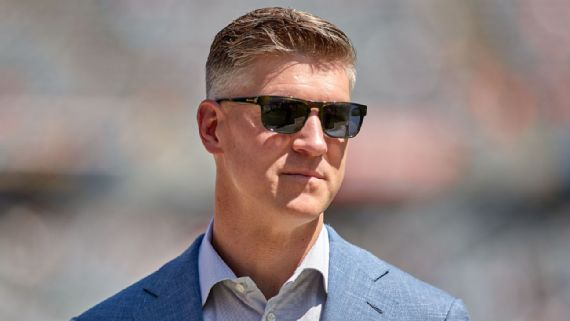
Minnesota moved on from assistant general manager Demitrius Washington, senior personnel executive Jamaal Stephenson, assistant director of college scouting Pat Roberts and pro scout Salli Clavelle. Teasley then appointed Andrew Healy and Trent Kirchner as assistant general managers before adding former Bears general manager Ryan Pace as a football adviser and Azzaam Kapadia as assistant director of pro scouting.
That’s a lot of change for mid-June, but the timing makes sense. Teasley arrived after the draft, when most teams had wrapped up their scouting. If he waited until next spring, he’d spend his first college season working with a setup he didn’t choose.
The team Teasley built is more interesting than any one hire. Healy brings research and strategy experience. Kirchner has years of traditional personnel experience and has worked with Teasley before in Seattle. Kapadia is another Seattle connection, but from a younger pro scouting background. Pace has already been a general manager and can give advice without running the show.
Vikings fans can make all the Mitch Trubisky jokes they want – I won’t stop them. Pace’s time in Chicago is worth a closer look, especially his quarterback picks and the cost to move up in the draft, but being an adviser is a different job. If Teasley wants someone who understands how big decisions can go wrong, Pace has plenty of experience to share.
The real question is whether all these voices will help the process or just make meetings longer. Teasley now has analytics experts, veteran scouts, trusted people from Seattle, current Vikings staff and two former general managers – Pace and Ryan Grigson – around him. That mix can spark good debates, but only if everyone knows their role and Teasley is ready to make the final call.
I’ve talked plenty about the org chart in theory. Now, we’re seeing Teasley’s version in action. The goal is simple: better draft weekends, better pro scouting and fewer seasons where coaches have to rescue things with undeveloped players.
There is still a missing name at EDGE
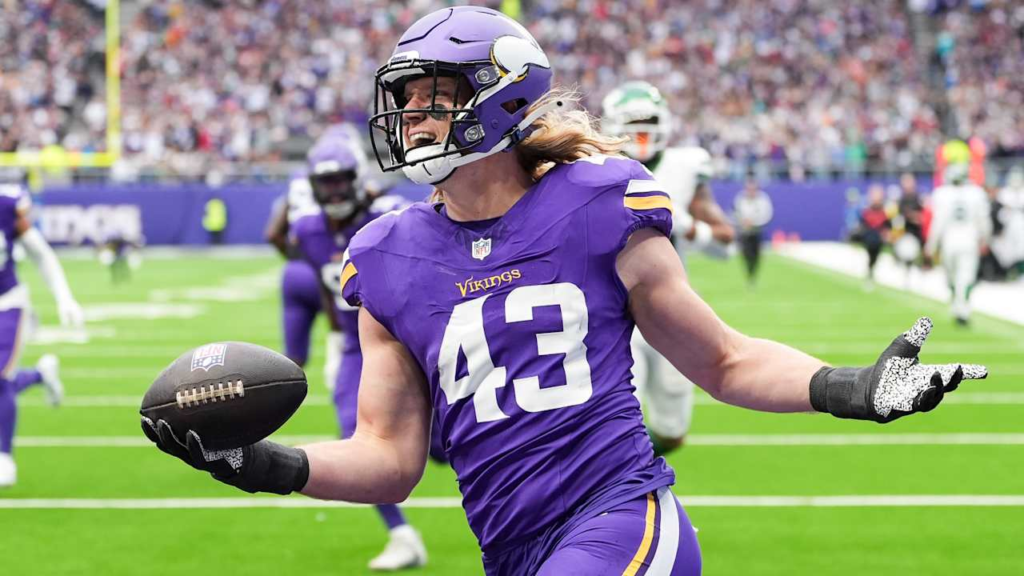
Alec Lewis’ post-minicamp 53-man projection for The Athletic included Andrew Van Ginkel, Dallas Turner, Bo Richter and Chaz Chambliss at EDGE. The fifth place was simply listed as a future free-agent signing.
I appreciated that honest approach instead of just listing five available veterans with impressive grades. The current group still isn’t complete.
Van Ginkel is a high-level defender who can rush, cover and move around the formation. Turner has the physical ability and now carries the expectation that followed the Jonathan Greenard trade. Behind them, Minnesota has developmental options, special-teams candidates and Tyrion Ingram-Dawkins experimenting with work outside at 290 pounds.
That should make camp interesting, but it’s less comforting for a full 17-game season.
When Turner missed the second minicamp practice, we got a preview of what could happen next. Richter, Chambliss, Tyler Batty and Ingram-Dawkins stepped in. It’s good for young players to get those reps in June, but the gap between the top two rushers and the rest is obvious.
The Vikings don’t need to sign a big name just because fans recognise him from a Pro Bowl graphic. They need an experienced rotational player who can set the edge, give Flores about 20 solid snaps and fill in for a few weeks without making the whole defense adjust if someone gets hurt.
Minnesota created part of this problem by trading Greenard and giving Turner a bigger role. That move could still work out, especially if Turner becomes the player the Vikings expect. But now, they can’t treat the third EDGE spot as just a group of camp hopefuls.
Teasley’s first key player signing might not be flashy, and that’s actually a good thing. The roster needs some steady, reliable help here.
The sixth receiver could take somebody else’s job
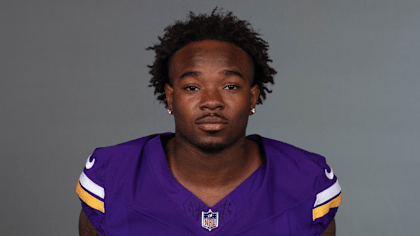
Dillon Bell has become one of the most interesting players on the roster – not because he fills a need, but because his rise creates a numbers problem.
Justin Jefferson, Jordan Addison and Jauan Jennings are secure. Tai Felton has speed, draft investment and looked more fluid during minicamp. Myles Price remains the leading return specialist. Bell, an undrafted rookie from Georgia, caught the ball consistently, worked with starters and flashed often enough for Lewis to include him as a sixth receiver in his projection.
Keeping six receivers makes sense, but there’s a trade-off.
The Vikings are likely to carry three quarterbacks. They may need nine offensive linemen because last season showed how quickly the group can be dismantled by injuries. Flores likes depth and flexibility in the secondary and front seven. Minnesota could still add an edge rusher and Harrison Smith remains outside any firm projection until he decides whether he is playing.
Every extra receiver means losing a spot somewhere else. That could mean keeping three tight ends instead of four, one fewer defensive lineman, a tougher decision at safety or less patience with a backup offensive lineman who only plays one position.
Bell’s job in camp isn’t just to catch enough passes to look good. He needs to show the Vikings that another team would want him, prove he can help on special teams and offer something different from Felton and Price. Just being the sixth-best receiver doesn’t always guarantee a roster spot.
This is where final roster decisions get more interesting than just ranking players. Claiborne can be the third running back and return kicks. Ingram-Dawkins can play both defensive line and edge. Jake Golday can develop at linebacker while taking on some of Van Ginkel’s extra duties. Players who can handle two roles make it easier to keep someone like Bell without leaving another spot short-handed.
Bringing in tight end Marshall Lang adds another wrinkle. The former Northwestern player spent time with Seattle when Teasley was there and joins a group that already includes T. J. Hockenson, Josh Oliver, Gavin Bartholomew, Ben Yurosek and Bryson Nesbit. The third tight end spot now has several contenders and the winner might be picked more for blocking and special teams than for catching passes.
This is the part of camp I enjoy once everyone’s had their fill of quarterback highlights. The back end of the roster isn’t just about who looks most talented – it’s about finding the right mix so coaches can handle injuries without scrambling for answers by Tuesday.
The most encouraging offensive line number is 5
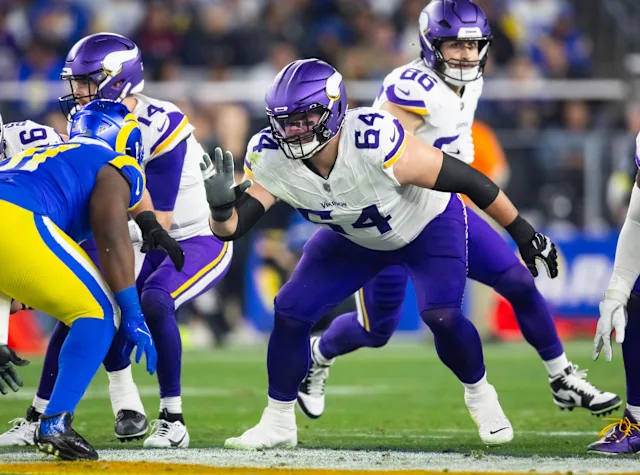
The Vikings’ planned starting offensive line played only 83 snaps together in 2025. That’s it – eighty-three.
Christian Darrisaw, Donovan Jackson, Ryan Kelly, Will Fries and Brian O’Neill played just over 8 percent of the offense’s total snaps together. Minnesota used 26 different line combinations last season, the most the team has had in over 10 years.
It’s tough to build anything with that much change. Protection calls shift, footwork changes, help goes to different players and the run game ends up asking running backs to fix problems that should have been blocked.
This spring ended with Darrisaw, Jackson, Blake Brandel, Fries and O’Neill as the projected starting five. There are still questions. Darrisaw needs to stay healthy. Brandel is learning center after playing almost everywhere else. O’Neill’s contract isn’t settled. We won’t know if Keith Carter’s tougher approach has helped the run blocking until the pads go on.
Still, having five healthy starters learning together in spring and coming back for camp would be a big change from last year.
Jackson summed up the difference between his first and second offseasons well. Last year, he felt lost, as if he were learning a foreign language. Now, he knows enough to focus on the details of his job. That kind of progress is easy to miss when every offensive line conversation turns into talk about Darrisaw’s knee or O’Neill’s contract.
Brandel’s work at center is worth watching for the same reason. He’s been learning the mechanics of snapping, getting better at reading defenses and even practising snaps with his wife, Natalie. He figured that if she could catch them, the quarterbacks probably could too. It’s a simple, everyday solution for a job that suddenly gets a lot of attention if a snap goes wrong.
There are tougher days ahead. Baltimore’s defensive front will be a real test during joint practices and Brandel still needs to prove he can master one position. For now, though, the offensive line has something it missed last year: time together before injuries and weekly game plans begin.
Training camp has a proper shape now

The Vikings have announced 13 public training camp practices, starting with Back Together Saturday and Legends Weekend on 1 August.
For fans coming from the UK or Ireland, most practices start at 2:30pm Central Time, which is 8:30pm for us. That means reports and social clips are easy to watch in the evening, instead of showing up at breakfast after everyone in Minnesota is asleep.
The main dates are:
- Saturday, 1 August: Back Together Saturday and Legends Weekend, practice at 8.30pm UK and Ireland time.
- Sunday, 9 August: the annual night practice at 1am UK and Ireland time in the early hours of Monday.
- Wednesday, 19 August and Thursday, 20 August: joint practices with the Baltimore Ravens, both beginning at 8.30pm UK and Ireland time.
Tickets for the general public went on sale Thursday, 18 June. Standard adult tickets are $10 and the night practice costs $15. If you’re thinking about going, use the official Vikings training camp page instead of relying on a screenshot that’s been passed around six group chats and lost a date or two. Baltimore practices should be the most useful football sessions. By then, Minnesota should be moving towards one quarterback receiving the bulk of the starter work. Turner and the EDGE group will be tested by a physical offence. The young defensive linemen will see what happens when spring movement drills become Lamar Jackson and Derrick Henry arriving with actual intent.
Training camp dates are mostly just calendar details, but they give the summer a clear deadline. The Vikings now know how long they have to add veteran help, sort out key contracts and decide which spring standouts deserve a real shot when the team returns.
Four things for the summer list
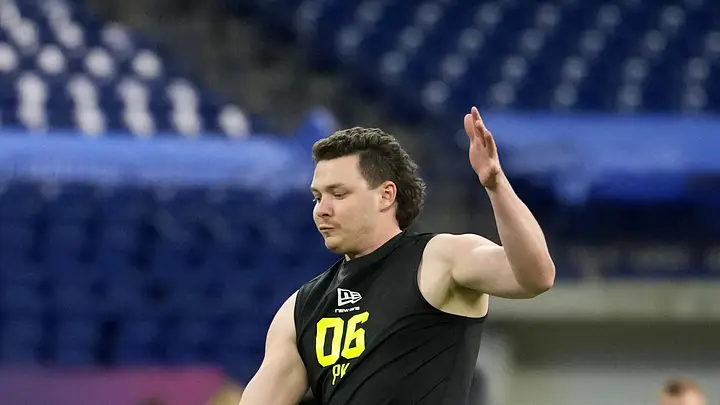
Minnesota signed defensive lineman Jahvaree Ritzie along with Lang, and released tackle Caleb Etienne and defensive lineman Monkell Goodwine. Ritzie had 6.5 sacks in his last college season at North Carolina and is another low-cost option for the defensive front. These moves won’t change the season outlook, but they show Teasley’s approach: using fresh knowledge and always tweaking the last few roster spots instead of treating the first 90 as set in stone.
Brett Thorson’s competition with Johnny Hekker for punter now feels more real than when the Australian first arrived through the international pathway program. Matt Daniels has praised Thorson’s hands and progress as a holder, which was the main thing keeping him from getting the job with Will Reichard. Hekker is still the safer bet, but Thorson now has a real shot at winning the job, not just because he’s younger.
Demond Claiborne’s path is also about filling two roles. His speed adds something to the offense that Aaron Jones and Jordan Mason don’t have, and his return skills give Matt Daniels another option. Pass protection is still a problem, though. O’Connell won’t put a young back next to either quarterback if one big run means missing a blitz on the next play.
I’m holding off on the Brendan Sorsby supplemental draft talk for now. Minnesota already has three established NFL quarterbacks, one developmental player and a new general manager getting ready for his first full draft. Unless the price drops way below the current second-round talk or the team shows real interest, it just feels like another way to keep the quarterback conversation continuing during a slow period.
What’s actually clear before the break
Over the next six weeks, we’ll all start turning guesses into decisions since there are no practices to prove us wrong. Bell will be called a roster lock, a veteran edge rusher will be photoshopped into purple, and every front-office hire will be seen as either a genius move or a disaster. That’s just how summer goes.
What we do know is that Teasley is now running his own personnel department. He’s brought in his own senior evaluators, kept analytics in the mix and added trusted experience from Seattle. Next, he needs to give that group a roster that doesn’t force Flores to build an entire EDGE rotation out of just two proven players and a few experiments.
The final 53-man roster is becoming a contest of versatility, not just names. Bell, Claiborne, Golday, Ingram-Dawkins, Lang and Thorson can improve their chances by filling more than one role. Meanwhile, the offensive line did the least flashy but maybe most important thing this spring: they stayed together long enough to learn.
The quarterback debate will still be waiting when camp starts on 1 August. Until then, there’s plenty happening elsewhere, and honestly, it’s been nice to focus on something different for a change.