
Darren Hails catches up on the Vikings from Thursday, 2 July to Wednesday, 15 July 2026. There was no blockbuster move while we were away, but Kevin O’Connell’s quarterback standard, more detail on the run game and a much tougher test for the defensive rookies have made training camp easier to judge.
Right, confession time: there was no Skol Scroll last week.
I was busy with other priorities and, to be fair to the Vikings, they didn’t punish me by trading Justin Jefferson or doing something equally ridiculous while I wasn’t looking. The roster I left is basically the roster still sitting there now, which was very considerate of them.
That means this edition covers two weeks, from 2 to 15 July. It wasn’t a fortnight packed with transactions. Minnesota didn’t name a starting quarterback, sign the veteran edge rusher people keep suggesting, extend Brian O’Neill or get a final answer from Harrison Smith. We mostly had rankings, predictions and another few rounds of people telling us what Kyler Murray and J. J. McCarthy might do before either of them have put a training-camp helmet on.
I can only read so many power rankings before I start ranking the rankings, and nobody needs that.
Still, the last two weeks weren’t empty. O’Connell gave his clearest description yet of what he wants from the quarterback competition. The Vikings started their official position previews and put some uncomfortable numbers beside last season’s problems. ESPN added proper context to the expectations around Minnesota’s rookie defenders. The Harrison Smith wait also moved from a sentimental summer question into something Brian Flores has to plan around.
The Vikings are nearly back. More importantly, we now have a better idea of what we’re supposed to be watching when they are.
O’Connell wants a standard, not a July winner
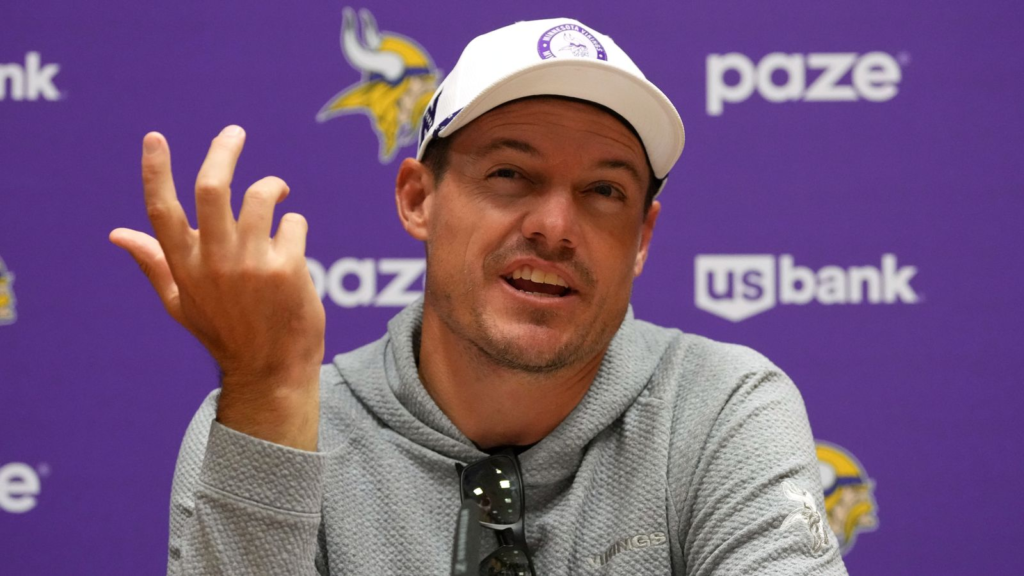
Kevin O’Connell went on The Dan Patrick Show on 9 July and was asked, once again, to explain the open competition between Murray and McCarthy.
His first answer was very O’Connell. He said he wasn’t familiar with a “closed competition”, then spent enough time talking through the whole quarterback room to make sure nobody could turn the appearance into a clean starter announcement.
The useful bit came when he described the standard he wants. O’Connell said Minnesota needed the quarterback position to drive winning by doing its job, bringing the best out of the skill players, limiting turnovers, generating explosive plays and helping the run game. NFL.com‘s account of the interview was another reminder that he isn’t treating this as a simple comparison of arm talent.
That may sound like coach language, but the Vikings’ own quarterback training-camp preview put a number beside it. In the two O’Connell seasons when the Week 1 starter completed the full schedule, Minnesota went 27–7. In the other two, when seven different quarterbacks were required, the Vikings went 16–18.
Availability won’t decide every rep, but it’s impossible to ignore after last season. McCarthy missed seven games in 2025 and has now missed 24 of a possible 34 across his first two NFL seasons. Murray’s missed 21 games over the last three years. The Vikings can talk about upside all they like; O’Connell needs a starter who can actually stay in the job.
The performance details are just as clear. McCarthy’s bad-throw rate was 21.3 per cent last season, compared with a league average of 16.1 per cent, and his 66.5 per cent on-target rate was the lowest among the qualifying quarterbacks. He also took sacks on 10 per cent of his dropbacks. The disruption to the offensive line played a part, but McCarthy still has to show better footwork, anticipation and judgement about when to stop trying to rescue a play.
Murray’s test is different. He already has the experience and the rare rushing ability. His problem is learning enough of a complicated offense to play freely rather than standing there translating the call in his head while Dallas Turner arrives from the side.
This is why I won’t get too excited when one quarterback gets more first-team reps on a Tuesday, and I won’t panic over a single interception clip either. O’Connell has already warned that the split won’t be 50-50 every day. The weekly pattern will tell us more: who gets the difficult situations, who handles Flores’ pressure looks, who keeps the offense on time and who starts building proper chemistry with the starters.
The competition still needs an end point. I’ve said that plenty, so I won’t drag us around it again. For now, O’Connell has at least told us what winning it is meant to look like.
Jefferson is still Jefferson, the quarterback has to make it look like it
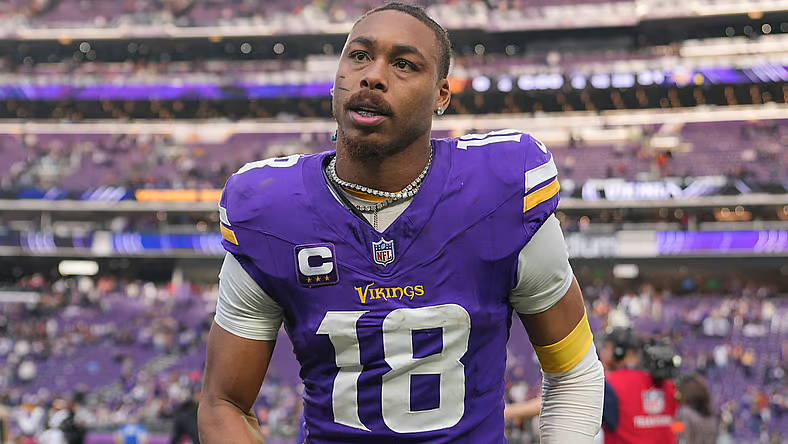
Justin Jefferson came second among wide receivers in ESPN’s poll of NFL coaches, executives and scouts, behind Ja’Marr Chase. Around 70 per cent of the voters placed Jefferson first or second even after the quietest full season of his career.
That’s a useful correction to some of the summer silliness. Jefferson didn’t suddenly forget how to play receiver in 2025. He still caught 84 passes for 1,048 yards, but two touchdowns was miles below his normal standard and Vikings quarterbacks produced a 57.9 passer rating when targeting him.
You can blame route detail, protection, injuries and the occasional drop as well. It wasn’t all on the quarterbacks. Even so, when one of the best receivers in football is being targeted that often and the passing game is producing a rating below 60, the main problem is fairly easy to spot.
The Vikings’ receiver and tight-end camp preview made the same point in a roundabout way. Jefferson, Jordan Addison and Jauan Jennings could be one of the best trios in the league, but all three need time with the eventual starter. Jennings has 15 receiving touchdowns since the start of 2024, Jefferson can still take over a game and Addison remains one of Minnesota’s best deep-ball players when the timing is right.
The job for Murray or McCarthy isn’t to prove who can throw the prettiest ball in an individual drill, it’s to make their receivers look like themselves again.
There’s a second camp question behind the obvious trio. Tai Felton is the only other receiver on the roster with an NFL catch, and he has three. Dillon Bell impressed during the spring, Myles Price brings return value and several young receivers have a route into the final 53, but the depth is based almost entirely on projection.
Bell is an interesting one. The official preview praised his size, confidence, work over the middle and ability to field returns. That gives him a real chance, but we’ve already done the spring-sleeper bit with him. Now he needs to block, contribute on special teams and keep making catches when defenders are allowed to be less polite.
Jefferson’s ranking tells us the league still trusts the player. Training camp will start showing whether the Vikings have built a passing game worthy of him.
The run game talk finally has some numbers behind it
We’ve heard about improving the run game for most of O’Connell’s time in Minnesota. I’m just as guilty as anyone of nodding along every summer, then wondering by October why the offense is back in third-and-long with Jefferson being double-covered.
At least the latest running back and fullback preview gave us something more useful than another promise.
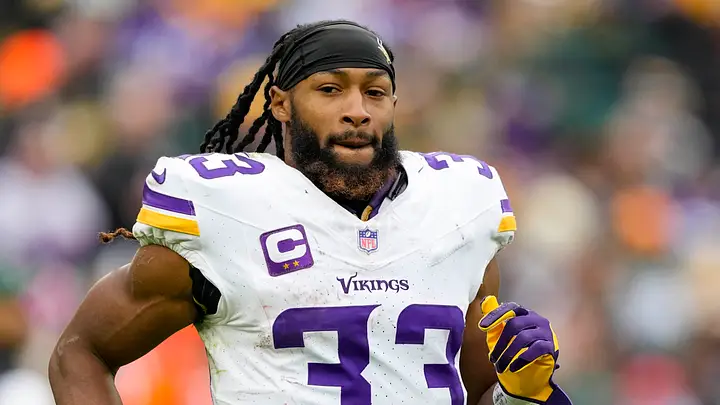
Minnesota averaged 4.5 yards per carry in 2025, the best mark of O’Connell’s four seasons, and scored 15 rushing touchdowns. That matched the team’s combined total from 2023 and 2024. The broad direction improved, even if the offense rarely felt dependable enough to lean on it.
The next step is turning a decent average into a run game that changes how opponents defend the whole offense.
Jordan Mason led the team with 758 yards and six touchdowns while Aaron Jones missed five games. Just over half of Mason’s yardage came after contact, which is exactly the sort of stubborn running Minnesota needs when the blocking isn’t perfect. Jones still offers more as a receiver and pass protector, but at 31 and after an injury-hit season, the sensible plan is to let both backs carry a proper share.
The more interesting detail is explosiveness. The Vikings produced only seven runs of at least 20 yards last season and one of 40 or more. Sixth-round rookie Demond Claiborne ran a 4.37-second 40-yard dash, so his route onto the team is obvious. If he can handle protection and special teams, he gives the backfield a type of speed it hasn’t had.
Max Bredeson has a different job. Replacing C. J. Ham isn’t about copying every snap Ham played, it’s about giving the offense a fullback and H-back who can move around the formation without telling the defense whether a run or pass is coming. The early signs were encouraging, but padded practices will tell us whether the blocking is ready.
There may also be a small scheme change to watch. The official preview suggested Minnesota could run a little more wide zone after leaning heavily on mid-zone concepts during O’Connell’s first four seasons. That should suit a healthier Christian Darrisaw, give the backs clearer cutback decisions and make Claiborne’s speed more useful.
For once, the run-game talk has several connected pieces behind it: Frank Smith and Keith Carter helping shape it, Mason and Jones sharing the work, Bredeson replacing Ham, Claiborne adding speed and an offensive line that should be healthier.
Now put the pads on and show us. I have learned my lesson about trusting July run game promises. Probably.
Flores doesn’t hand out rookie snaps
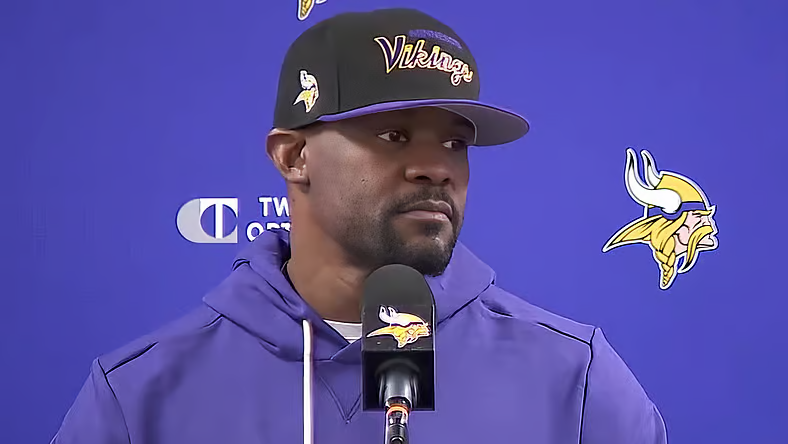
Minnesota used four top-100 picks on defensive players this spring, so it is tempting to draw up the Week 1 lineup with Caleb Banks, Jake Golday, Domonique Orange and Jakobe Thomas all involved.
Brian Flores won’t care where we pencilled them in.
Kevin Seifert’s ESPN look at the rookie class put the challenge into proper context. Over Flores’ three seasons as defensive coordinator, the Vikings have had the NFL’s second-fewest rookie defensive starts and second-fewest rookie defensive snaps. Ivan Pace Jr., an undrafted free agent in 2023, is the only rookie who has started regularly for him.
Part of that is draft history. Minnesota simply hasn’t given Flores many premium defensive rookies. Dallas Turner was the only defensive player taken in the top 100 during that period, and even he played roughly 300 snaps in his first season.
This class is different, but the standard won’t be.
Banks should have a chance to start on the defensive line if his foot is fully healed. The health update comes first; there is no point building the whole front around him before we have seen him survive consecutive padded practices. Orange can challenge Levi Drake Rodriguez inside, while Golday appears more likely to begin behind Blake Cashman and Eric Wilson and earn work through pressure packages and multiple roles.
Thomas may have the most interesting route because the safety plan is still moving. He made 76 tackles, intercepted five passes and recorded 3.5 sacks in his final college season, lining up deep, in the box, in the slot and on the line. The Vikings’ film breakdown of Thomas shows exactly why Flores would like him.
The problem for every rookie is that this defense asks players to communicate, disguise coverages, change jobs and react to the offense without hesitating. Athletic ability gets them into the conversation. Trust gets them onto the field.
The draft class can be exciting without pretending all four defenders will start immediately. Camp is going to tell us which of them can handle Flores at full speed and which need time. That’s a much better question than simply asking whether a high draft pick is “a starter” before August.
Harrison Smith’s answer is no longer just about Harrison Smith
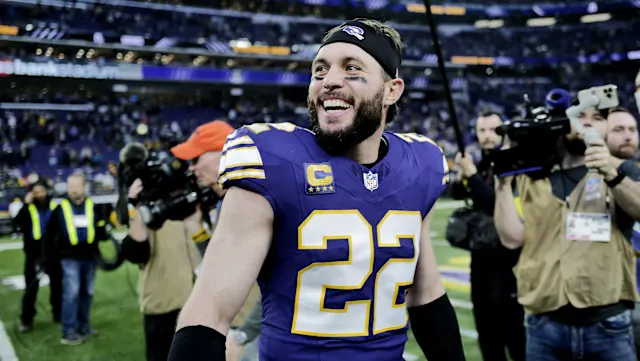
I would still like Harrison Smith to return. I don’t think that will surprise anyone.
He can play, he understands this defense and there is something reassuring about seeing number 22 at the back of it. But the Vikings have given him time to decide after releasing him with a post-June designation, and training camp cannot be built around the hope that he turns up eventually.
Alec Lewis said this week that the situation remains up in the air and that the Vikings have effectively given Smith a blank canvas. There is no clear deadline. His body, his mind and whether he still wants the feeling of playing on Sundays will decide it.
That’s fair to Smith. He has earned the space, but it also means Flores has to start camp as though he isn’t coming back.
Lewis identified Josh Metellus as the likely communication hub if Smith is absent, with Theo Jackson, Jay Ward and Thomas competing around him. Thomas is the unknown who could change the whole shape of the group. If he learns the calls quickly enough, his range and flexibility would let Flores keep using three-safety packages without asking one player to imitate Smith.
If Thomas isn’t ready, Ward and Jackson become more important, Metellus may have to spend more time deep and the Vikings could eventually look outside the current group. None of that rules out Smith returning later. It simply stops his decision holding up everyone else’s development.
I think that’s the right way to handle it. Give the younger safeties the starting work from the first practice. Let them make mistakes while there is time to fix them. If Smith decides in August or even later that he wants one more run, the Vikings can work out what that means then.
His return would still help. It just cannot be the only plan.
The dates are close enough to put in the diary
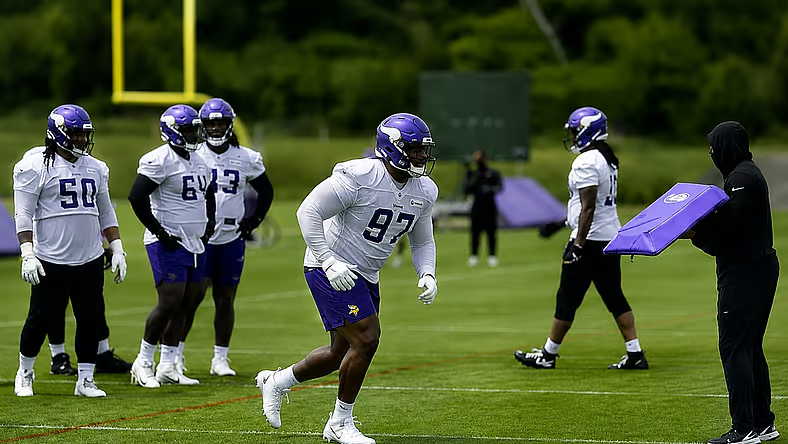
The long summer wait is nearly done. Rookies report on Sunday, 26 July, with the veterans due back on Tuesday, 28 July. The first practice open to fans is the Back Together Weekend session on Saturday, 1 August.
For those of us following from the UK and Ireland, the preseason starts at a very civilised 6 p.m. on Saturday, 15 August, away to the Giants. The Ravens joint practices follow on 19 and 20 August before Baltimore visits for another 6 p.m. preseason game on Saturday, 22 August. The final warm-up in Denver begins at 2 a.m. our time on Saturday, 29 August, because the NFL clearly thought two sensible kick-offs in a row was becoming dangerous.
By the Ravens week, the quarterback competition should have changed. It doesn’t necessarily need a public winner before those joint practices, but one player should be receiving enough first-team work to prepare properly against a strong opponent. The offensive line and run game should have faced enough padded sessions to show whether the summer changes are real. The defensive rookies should have started separating into immediate contributors and longer-term projects.
That’s what the last two weeks gave us. No dramatic transaction, no magic solution and no depth-chart announcement. Instead, the Vikings have made the tests clearer.
Can Murray learn the offense quickly enough, or can McCarthy clean up the accuracy and pocket problems that hurt him last year? Can either of them bring Jefferson, Addison, Jennings and Hockenson back into a functional passing game? Can the run game create explosive plays rather than simply posting a respectable average? Which rookies can earn Flores’ trust? Can the safety group move forward without waiting for Smith?
We have spent most of the summer arguing about possible answers. In less than two weeks, there will finally be some football to judge.
I’m ready for that. I’ve had enough rankings to last me until at least next July.