
Darren Hails looks back at the Minnesota Vikings news from Thursday, 27 August to Wednesday, 2 September 2026. The preseason ended badly, Nolan Teasley’s first roster came and went, J. J. McCarthy stayed, and two obvious holes were patched before anybody had time to learn all 53 names.
There’s something wonderfully NFL about spending an entire summer trying to predict a 53-man roster, watching the team finally announce it, and then seeing two names changed the following afternoon.
If you’d already committed all four quarterbacks and four tight ends to memory, I’m sorry. The Vikings claimed two offensive linemen on Monday, Max Brosmer and Dillon Bell were waived, both returned to the practice squad on Wednesday and Kyle Van Noy arrived to help an edge group that had suddenly become very thin.
So yes, Minnesota has its roster. Sort of.
General manager Nolan Teasley described the exercise as “70 over 53”: the active roster and practice squad are one group, and there’s no finish line. That might sound like standard GM language, but his first few days in charge made it quite literal.
The first version told us which young players had earned the coaches’ trust. Everything that happened next told us where the front office still felt uncomfortable. With the regular-season opener against Green Bay getting rather close, the second part is probably more useful.
Denver gave the depth players one last uncomfortable test
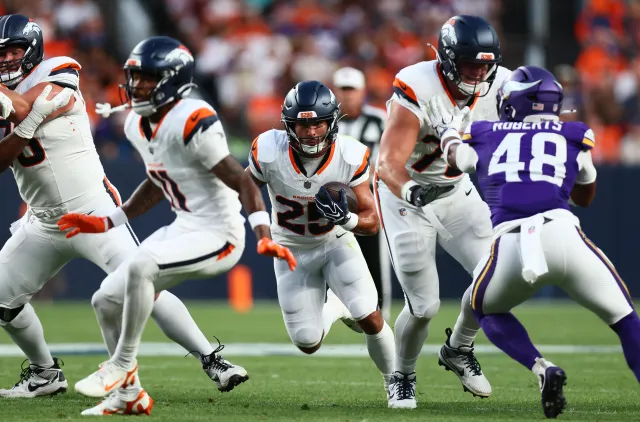
The Vikings finished the preseason with a 34–6 defeat in Denver. Kevin O’Connell and Sean Payton rested their starters, so treating it as a preview of the regular season would be daft, but it wasn’t a particularly reassuring evening for Minnesota’s reserves.
Carson Wentz played two short series and completed three of four passes for 15 yards. Brosmer took the rest, finishing 20-of-35 for 166 yards, but the offense only managed two field goals and went 0-for-2 in the red zone. Across three preseason games, the Vikings scored one touchdown.
The defense gave up 412 yards, allowed Denver to convert 7-of-14 third downs and conceded an 88-yard touchdown after leaving tight end Justin Joly entirely alone in the middle of the field. The final numbers were every bit as scruffy as the score.
Again, these weren’t the players Minnesota expects to carry the season. I don’t care about an August win–loss record, and I doubt anybody inside the building does either. What the game did show was how quickly things could become uncomfortable if injuries push too many backups into important jobs.
That became even more relevant when edge rusher Tyler Batty tore his ACL and rookie safety Jacob Thomas left with an ankle injury. The score can be forgotten. The warning about the depth behind the starters cannot.
The first 53 was more of a starting point
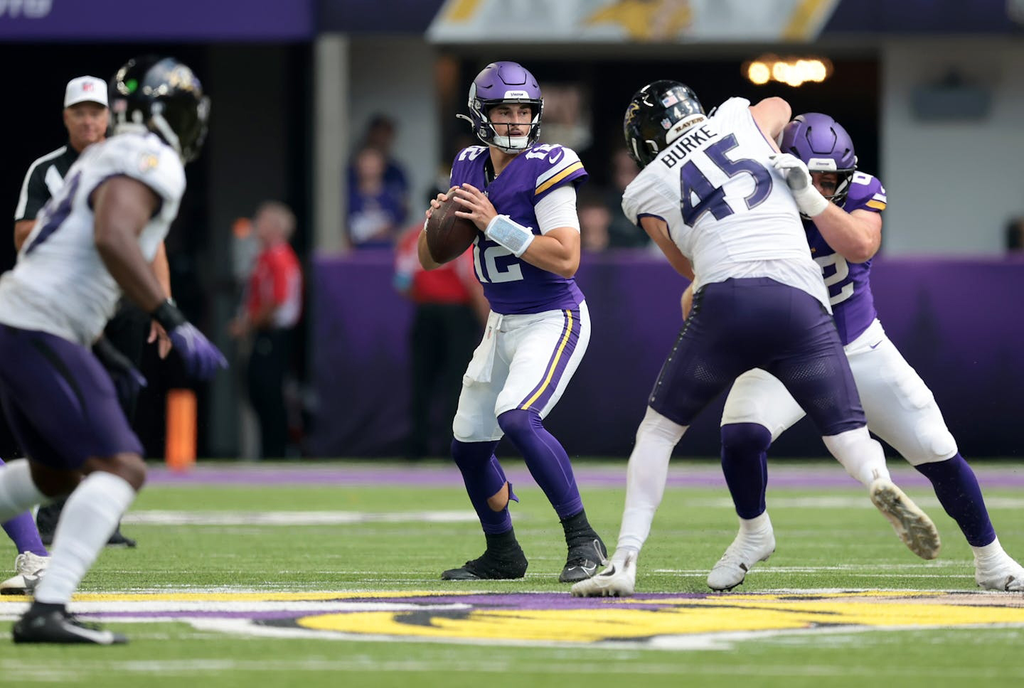
Minnesota’s initial roster had a slightly odd shape: four quarterbacks, four tight ends, eight offensive linemen and only four healthy outside linebackers.
There was logic behind most of it. Brosmer had started two games in 2025 and knew the offense. Bell had done enough as an undrafted rookie to earn an early place. Ben Yurosek and Gavin Bartholomew offered different skills behind T. J. Hockenson and Josh Oliver. Chaz Chambliss could cover edge, inside linebacker, fullback and special teams, which is a useful way to make one roster spot do the work of several.
Even so, the offensive line number looked light. Blake Brandel is making a full-time move to center, Michael Jurgens is on injured reserve with a designation to return and the original three reserves included two tackles. One injury on the interior could have left the Vikings asking somebody to learn a new job rather quickly.
On Monday, the club claimed guard Trevor Keegan and center Nick Samac. Keegan is a former Michigan captain who has spent time with Philadelphia and Dallas. Samac appeared in 11 games for Carolina last season, mostly on special teams, and gives Minnesota an actual backup center.
Brosmer and Bell were waived to make room, then cleared waivers and came back on the practice squad two days later. That worked neatly. The Vikings kept both developmental players in the building while using the active places to address a more immediate weakness.
It doesn’t mean the offensive line is suddenly fixed. Keegan and Samac arrived less than two weeks before Week 1 and neither has much NFL offensive experience. Their arrival simply gives O’Connell more sensible options if the starting five doesn’t stay intact.
McCarthy stayed, which says more than the rumours
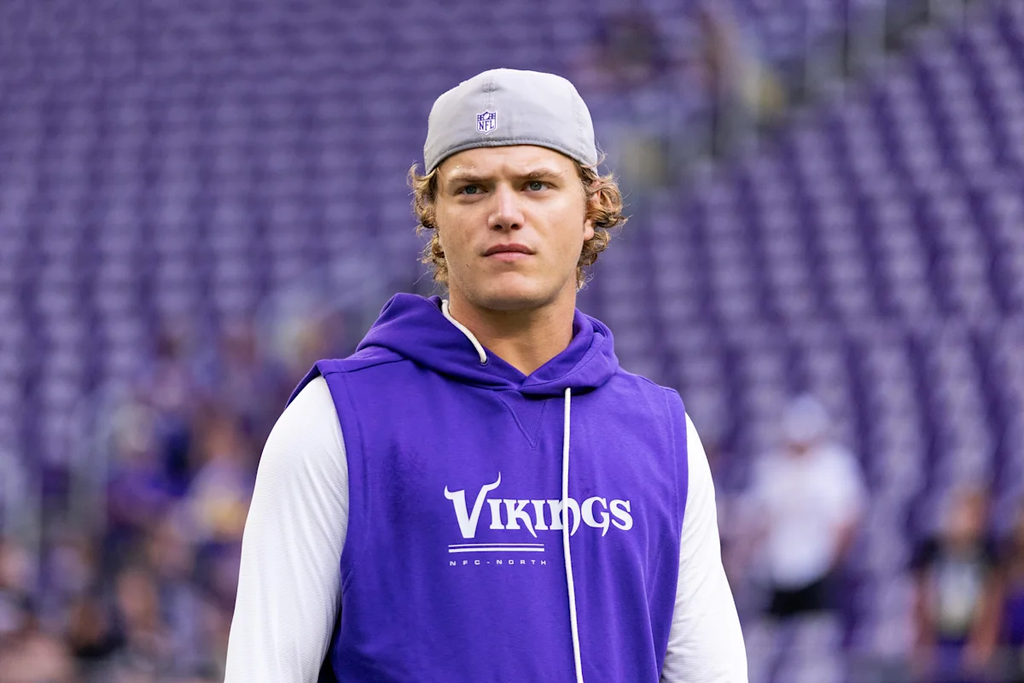
J. J. McCarthy generated an impressive amount of noise without playing a snap in Denver.
He missed the game because of the ankle injury suffered against Baltimore. O’Connell described him as day-to-day, while Adam Schefter later called it a multi-week sprain. Add the trade speculation, the four-quarterback roster and the belief that Wentz has moved ahead of him, and the whole thing became exactly the sort of story that can fill a quiet few days before Week 1.
The Vikings’ actions were calmer. They kept McCarthy on the 53, waived Brosmer when they needed a roster spot and then brought Brosmer back as the developmental fourth quarterback. On Wednesday, Teasley said McCarthy had been a full participant in practice on Monday and Tuesday and that he expected him to be on the roster against Green Bay.
Teasley wouldn’t name the backup outright, but his public message was firmly about patience. McCarthy has started only 10 NFL games, he’s 23, and, in the GM’s words, “his story is not written.”
That doesn’t magically remedy the last two years or make the uncertainty disappear. McCarthy has lost the starting job to Murray and Wentz still looks like the safer short-term option if the offense needs a veteran to step in. The Vikings also have a decision coming in the near future because a first-round quarterback can’t remain a vague future project forever.
For now, though, the club had several easy opportunities to move on and didn’t take any of them. I’ll give that more weight than another week of imaginary trade destinations.
Jefferson and McCardell are still doing the difficult work
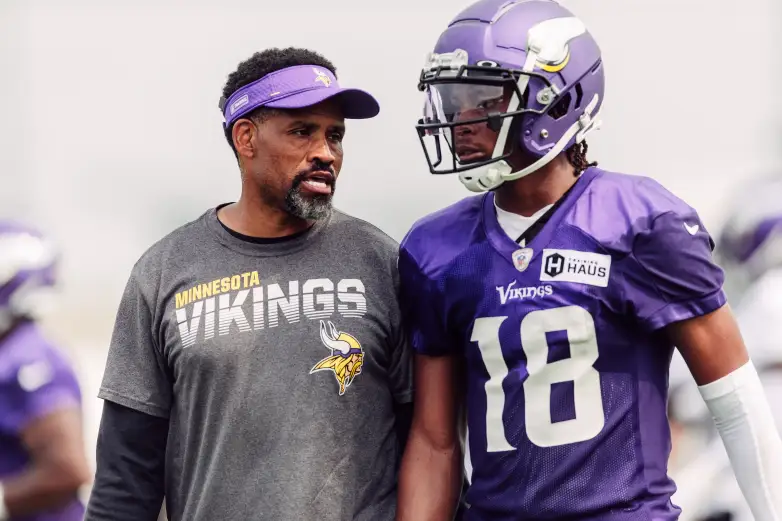
Almost everything around the Vikings this week was about the bottom of the roster, but one of the more interesting stories concerned the player at the very top of it.
Keenan McCardell has coached Justin Jefferson since 2021. He arrived already convinced Jefferson could be special, then helped him sharpen the route breaks and separation that turned a brilliant rookie into the 2022 Offensive Player of the Year. When defenses began building coverages around stopping Jefferson, the work changed towards recognition, spacing and finding the small openings that were still available. Jefferson later asked O’Connell to keep McCardell on the staff.
That relationship mattered during a difficult 2025 season. Jefferson went 11 straight weeks without a 100-yard game and his connection with McCarthy never looked comfortable. Matthew Coller’s account of McCardell’s work makes clear that the conversations weren’t only about routes. They were also about leadership, frustration and what the team needed from a captain when the offense was struggling.
The hopeful part is that Jefferson and Murray connected repeatedly on deep throws in camp. If the stronger run game is real and Jauan Jennings can make defenses respect the physical side of the offense, Jefferson should see more genuine one-on-one chances. That’s a much better path to a rebound than simply demanding another 170 targets. The Vikings don’t need to rediscover whether Jefferson is good. They need the rest of the offense to make defending him slightly less comfortable.
Kyle Van Noy is the sort of late signing that makes sense
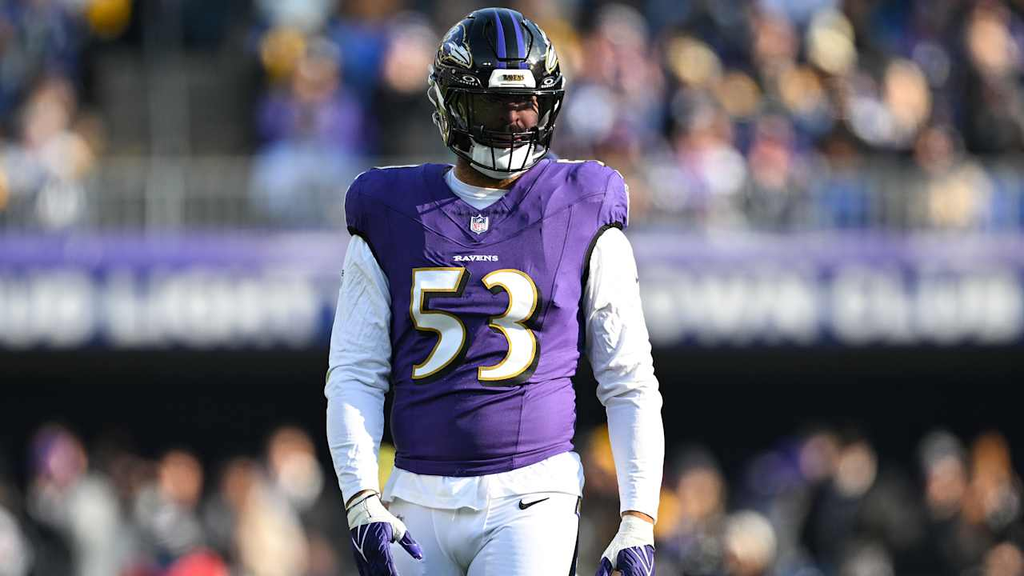
The EDGE problem had been sitting on the roster board since Jonathan Greenard was traded. Tyler Batty’s injury turned it from a concern into a job that needed filling.
Minnesota moved quickly. Van Noy visited on Tuesday and signed to the practice squad on Wednesday, giving the Vikings a 35-year-old veteran behind Dallas Turner and Andrew Van Ginkel, rather than relying entirely on Richter and Chambliss.
The practice squad label might make it sound like a minor move, but veterans can be elevated on game day and Van Noy has a realistic route into the defensive rotation once he’s ready. He has 57 career sacks, spent the past three seasons in Baltimore and produced 23.5 sacks over that spell. He’s not arriving to take Turner’s job or play every snap, he’s being asked to give Brian Flores a trustworthy third option.
The familiarity helps. Van Noy played for Flores in New England and Miami, so he’s not walking into a completely foreign defense with the Packers game around the corner. At this stage of the summer, finding a veteran who knows the coordinator and accepts a supporting role is about as tidy as these things get.
The role should be broader than chasing sacks. In the Vikings’ own roster review, Pete Bercich highlighted Van Noy’s physicality, his ability to set an edge and the option to use him on inside stunts. That gives Flores another way to protect a young defensive line and move pressure around without asking Van Noy to pretend he’s still a full-time starter.
It also closes a loop from earlier Scrolls. For weeks, the third EDGE question was just a list of available names and hopeful young players. An injury forced the decision, but the Vikings have finally made one.
Brett Thorson won a properly close competition
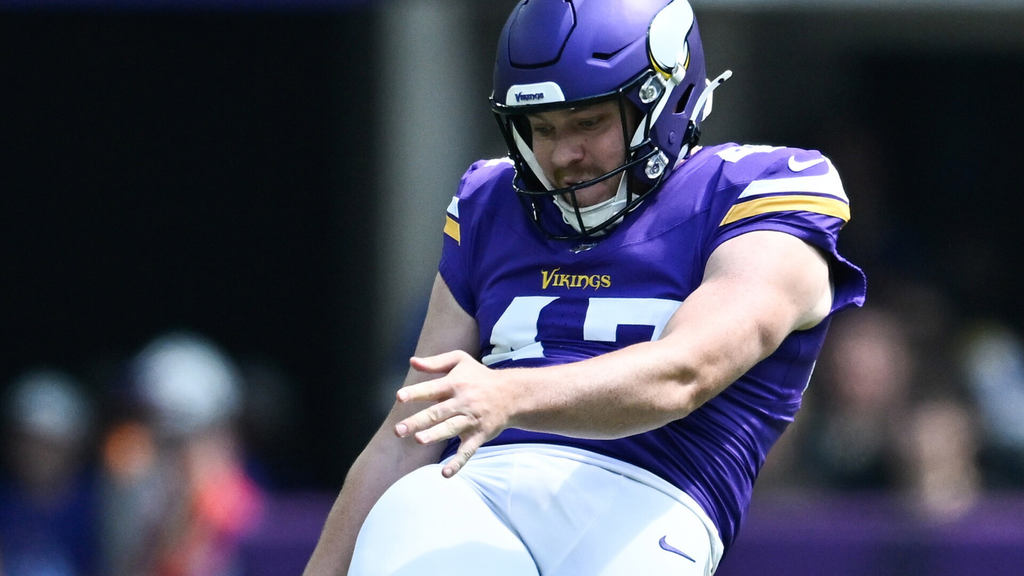
The final game did almost nothing to separate the punters. Thorson punted three times for 156 yards. Johnny Hekker punted three times for 156 yards. Both put two inside Denver’s 20, while Thorson’s longest went one yard farther.
After all that symmetry, Minnesota chose the rookie.
Hekker’s contract was terminated on Sunday and Thorson made the initial 53. The former Georgia punter had the younger leg and the cheaper contract, but he also had to prove he could hold for Will Reichard after never doing it in college. Clean operations through the preseason appear to have removed the biggest reason for keeping the veteran.
Teasley offered the clearest confirmation afterwards, describing the field-goal operation as seamless. For a rookie punter replacing one of the best holders in the league, that may have mattered more than the one extra yard on his longest punt.
There’s always a slightly brutal side to this. Hekker is one of the best punters of his generation and didn’t have a bad summer. Sometimes a younger player wins because he shows enough to make age and cost part of the decision, and that seems to be what happened here.
Thorson will have mistakes because he’s a rookie. If the holding goes wrong, nobody will care how promising his leg looked in August. Still, he was given a fair competition against a serious NFL punter and won it. That’s a decent achievement for an undrafted player who arrived with one rather important part of the job still to learn.
Teasley’s first cutdown was practical rather than sentimental
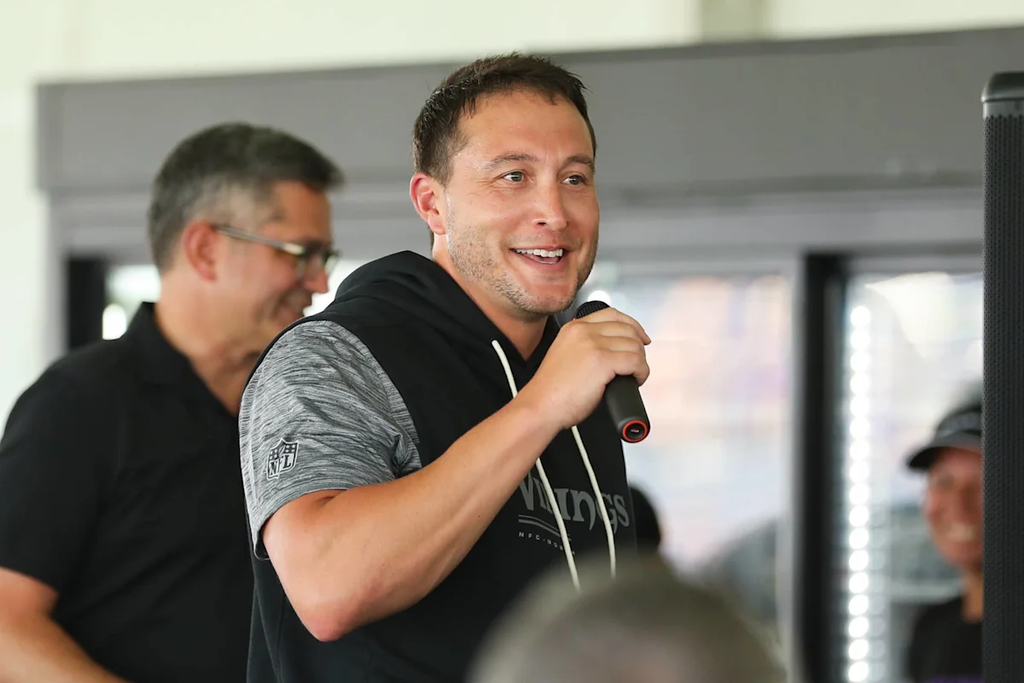
This was the first roster deadline with Teasley in charge, and there were a few signs that old draft status was not going to protect anybody.
Walter Rouse, a sixth-round pick in 2024, didn’t make the offensive line group. Rather than simply waiving him, Minnesota sent Rouse and a 2027 seventh-round pick to New England for a 2027 sixth. It’s not a franchise-changing return, obviously, but turning a likely cut into a small move up the draft is still worth doing.
The roster also rewarded players who forced their way into the conversation. Undrafted safety Jacob Thomas survived despite the ankle sprain in Denver. Thorson beat Hekker. Chambliss made himself difficult to cut by doing several jobs, while Myles Price’s return value helped secure his place in a receiver group that later moved Bell to the practice squad.
None of those decisions guarantees the right 53. Caleb Banks remains a first-round rookie who may need time before Flores can trust him with a large role. He’s only played four games since 2024 and admitted that repeated rehabilitation spells affected his conditioning, which helps explain an uneven preseason without removing the expectations that come with the 18th pick. The safety group is young and the reserve line has just been rebuilt with players from elsewhere. There is plenty here that can still go wrong.
What I appreciated was the lack of pretence. Teasley did not act as though Sunday’s announcement completed the job. He used waivers, found a trade, brought back the young players he still wanted and added a veteran where an injury had left a clear hole. The roster is unfinished because every roster is unfinished at this point, not because the club has lost the plot.
What comes next
The Vikings now have a weekend without a game, then the preparation becomes entirely about Green Bay. The Packers visit U.S. Bank Stadium on Sunday, 13 September, with kick-off at 9:25 p.m. in the UK and Ireland. That should be late enough for everybody to spend the whole day becoming increasingly unreasonable.
Before then, Van Noy has to get up to speed, Keegan and Samac need enough of the offense to be useful, and the Vikings need clarity on Jacob Thomas and the rest of the safety group. O’Connell still hasn’t publicly settled the order under center, although Teasley’s comments made it clear that McCarthy remains part of the plan.
The preseason didn’t give us a clean final answer on this team. It gave us a strong-looking starting defense, an offense we’ve barely seen together and a second group that had a fairly miserable last evening in Denver. Now the roster has been patched around some of those concerns.
That’s enough for the end of August. Green Bay will tell us much more, and unlike the preseason, we won’t be able to shrug off the score afterwards.