
Darren Hails looks beyond another defense-led Vikings victory to Jake Golday’s growing role, a smaller job that may finally suit Jauan Jennings, the backfield decision made before Aaron Jones was hurt and the practice squad moves hiding beneath the trade deadline noise.
The Vikings are 6–0, the last unbeaten team in the NFL and, depending on which part of Sunday you watched, either very good at winning football matches or very committed to making them harder than necessary.
You will have read the main version of the Indianapolis game by now. The offense spluttered, Blake Cashman was everywhere, Harrison Smith finished it and Minnesota escaped with a 16–10 win. All true. All covered.
The more interesting bit for The Skol Scroll is what changed underneath it.
A rookie linebacker finally reached the defensive rotation. A receiver produced his best game after his workload was cut. Jordan Mason was already taking over the backfield before Aaron Jones’ knee flared up. A running back who had technically been released made three tackles on special teams. Then Minnesota signed two tight ends while most of the internet was busy trading for somebody far more famous.
Six wins can hide quite a lot. Let’s have a rummage.
Jake Golday has finally reached the defense
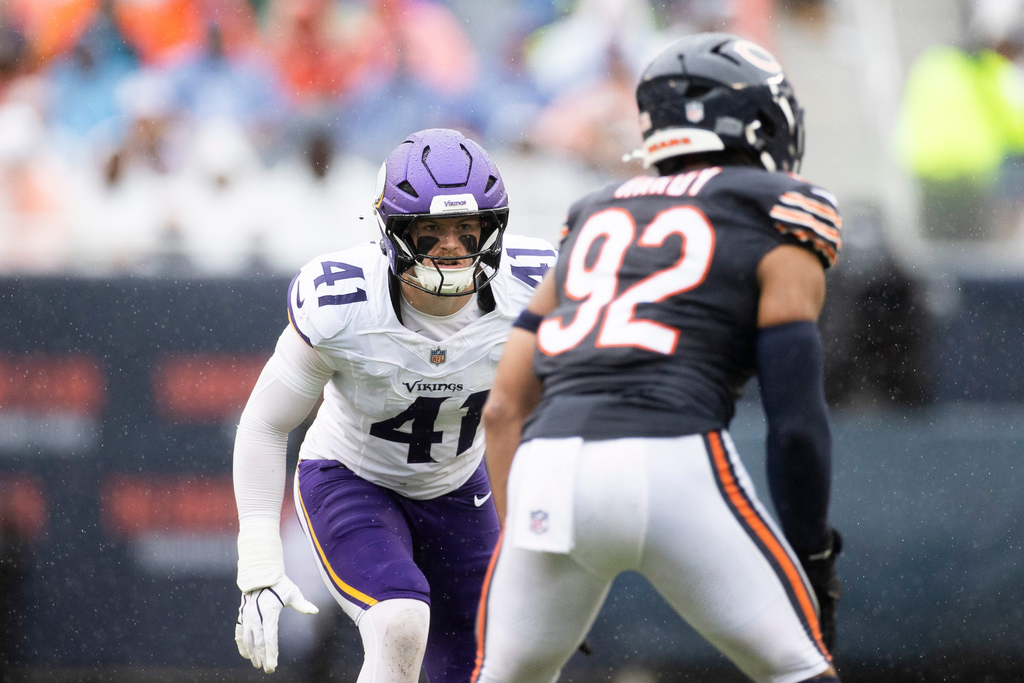
Jake Golday’s punch-out against New Orleans earned him a mention here a fortnight ago. It was exactly the sort of special teams play that can be swallowed by a standard game report, especially when the player responsible hadn’t taken a defensive snap that day.
Indianapolis gave us the follow-up.
Golday played nine snaps on defense against the Colts, more than the seven he’d managed across the first five games combined. Ivan Pace Jr. played four.
Nine snaps isn’t a depth-chart coup. Brian Flores hasn’t marched Pace out of the building and handed Golday the keys to the linebacker room. Eight of Golday’s nine plays came against the run, and one game is far too small a sample to declare anything permanent.
It’s still the first sign that the second-round pick’s role is moving beyond kick coverage and the occasional bit of chaos. The timing is interesting as well. Minnesota had the bye to review the opening five games, then returned with Golday receiving a career-high defensive workload and Pace’s role reduced.
Golday was drafted because he can do a little of everything. He’s played defensive end, Mike linebacker and Sam linebacker, with enough movement to work in space and enough size to join a pressure look near the line. Trying to teach him all of that was always likely to make the start of his rookie season quieter than the draft position suggested.
Perhaps this is the point where the coaching staff starts cashing in some of that versatility. Detroit’s motion, screens and work over the middle will test whether Minnesota’s linebackers can move without losing their run fits. Golday doesn’t have to replace Pace to become useful there. Flores only needs another piece he can show in one place before moving somewhere else.
The Saints punch-out looked like a special teams rookie making a special teams play. The Colts workload suggests Minnesota may now be asking what else it’s found.
Fewer snaps might be the Jennings answer
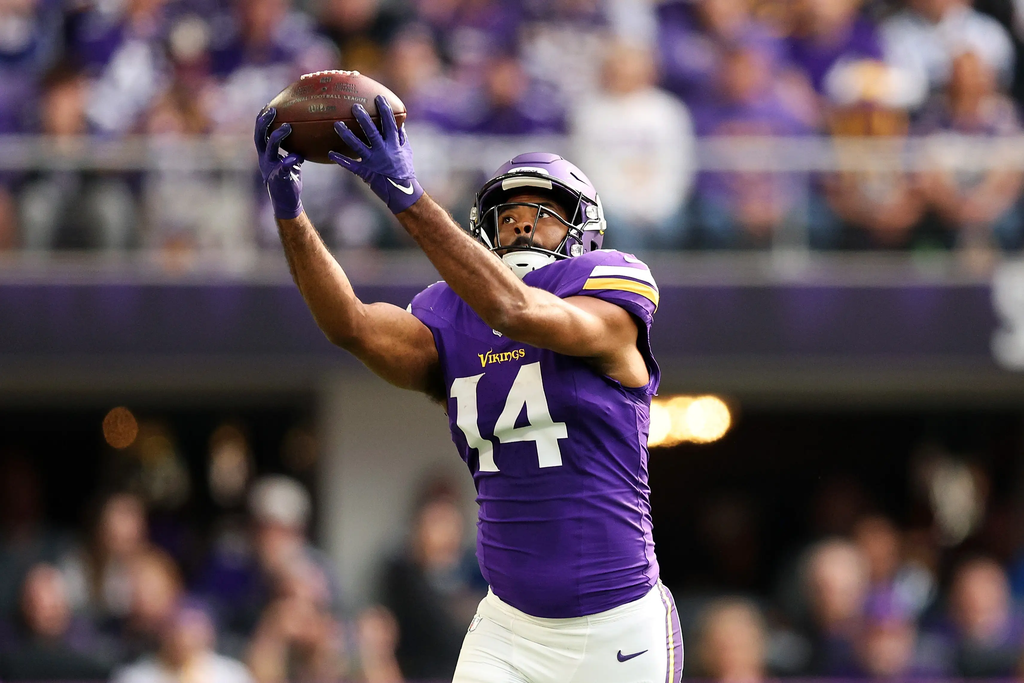
Jauan Jennings played 49 offensive snaps in New Orleans, received one target and didn’t catch it. Against Indianapolis, with Jordan Addison back in the line-up, Jennings played 33 snaps.
Naturally, he had his best game as a Viking.
Jennings caught two of three targets for 34 yards, created 24 yards after the catch and moved the chains twice. Those 34 yards were more than he’d gained in his first four appearances combined.
It wasn’t the breakout imagined when he signed a one-year deal worth up to $13 million. It was, however, the first afternoon when the role made some sense.
Jennings was never meant to become the centre of this passing game. Justin Jefferson, Jordan Addison and T. J. Hockenson already occupy that space. His value was supposed to arrive in smaller, nastier moments: blocking on early downs, beating a third corner, finding yards after contact and giving Kyler Murray somewhere physical to go when the elegant part of the play has disappeared.
The opening month became awkward because Minnesota was giving him plenty of snaps without finding those moments. The trade rumours followed the empty stat line, then Addison’s return offered a simpler answer. Jennings did less, but what he did carried more purpose.
One useful game doesn’t settle the trade talk or repair a season that’s produced only four catches. It does show why moving him down the hierarchy needn’t mean moving him off the roster. If 30-odd purposeful snaps produce more than 50 anonymous ones, Minnesota may finally have found the job it thought it was buying in May.
The backfield decision came before the injury
Aaron Jones aggravated his left knee late in the fourth quarter and didn’t practice on Wednesday. Kevin O’Connell described him as day-to-day, which immediately restarted the usual trade deadline carousel. Jonathan Taylor was wearing purple on social media before Jones had finished treatment.
The game itself offered a more immediate answer.
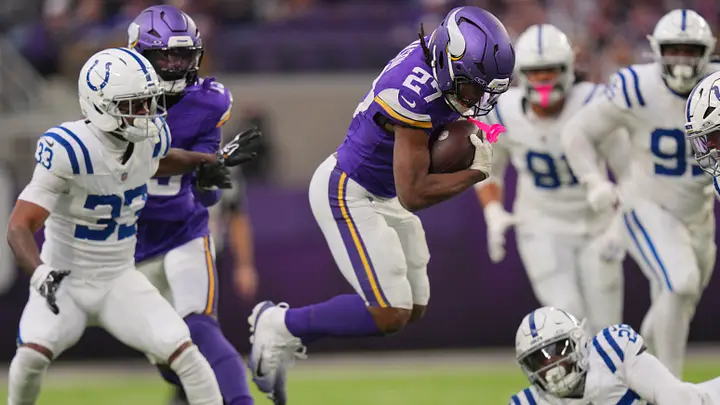
Jordan Mason played 38 offensive snaps, carried 15 times for 68 yards and had already taken the larger share of the backfield before Jones left. Jones played 15 snaps and carried eight times for 26 yards.
That looked less like a reaction to injury than the rotation Minnesota wanted when the season began. Jones proved during Mason’s absence that he can still carry a much larger load. At 31, and after already dealing with the same knee this season, the reward shouldn’t be asking him to do it every Sunday.
Mason’s return from injured reserve allowed the Vikings to put the heavier early-down work back in his hands. Jones could then be the change of pace, receiver and late-down problem rather than the whole backfield. The knee flare-up may alter Sunday’s numbers, but it didn’t create that direction.
There may still be a deadline move if Jones’ recovery stalls or the price becomes unusually friendly. Nothing in the known reporting, however, has turned Taylor or any other runner into a confirmed Vikings target. The most useful evidence we have is the work Minnesota actually gave Mason, and it says the first answer was already on the roster.
DeeJay Dallas was released, then became essential
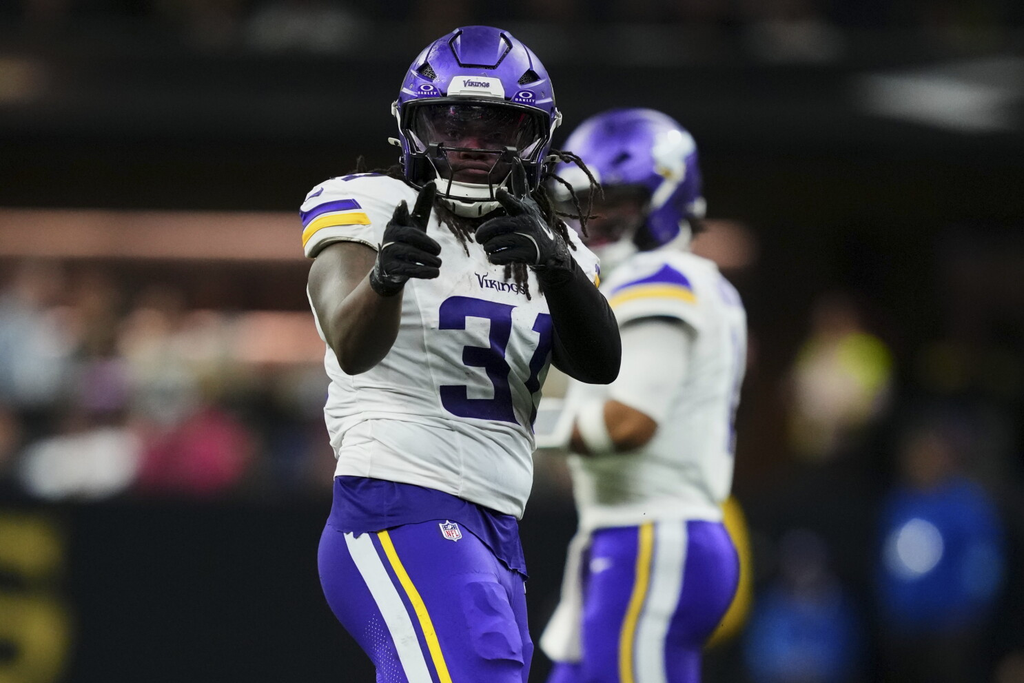
Saturday’s transaction list said the Vikings activated Mason, released DeeJay Dallas from the 53-man roster, released Natrone Brooks from the practice squad and then signed Dallas back to it.
It looked like an ordinary numbers move. Dallas cleared the roster spot Mason needed, remained available and was elevated for the Colts game. Nothing to see here.
Then he made three special teams tackles.
The first prevented a 43-yard kickoff return from becoming worse and spared Will Reichard from having to attempt the sort of last-man tackle that makes every coach age visibly. The second stopped a punt return for no gain. On the third, Dallas fought through a blocker, kept his balance and still reached the returner.
This is why the last few roster places are never quite as simple as “best reserve running back” or “sixth receiver”. Dallas didn’t receive an offensive snap. He was still trusted with a job that could have changed the game three separate times.
On paper, he was cut. In practice, Minnesota spent the weekend making certain he could play.
Two tight ends tell us what’s still missing
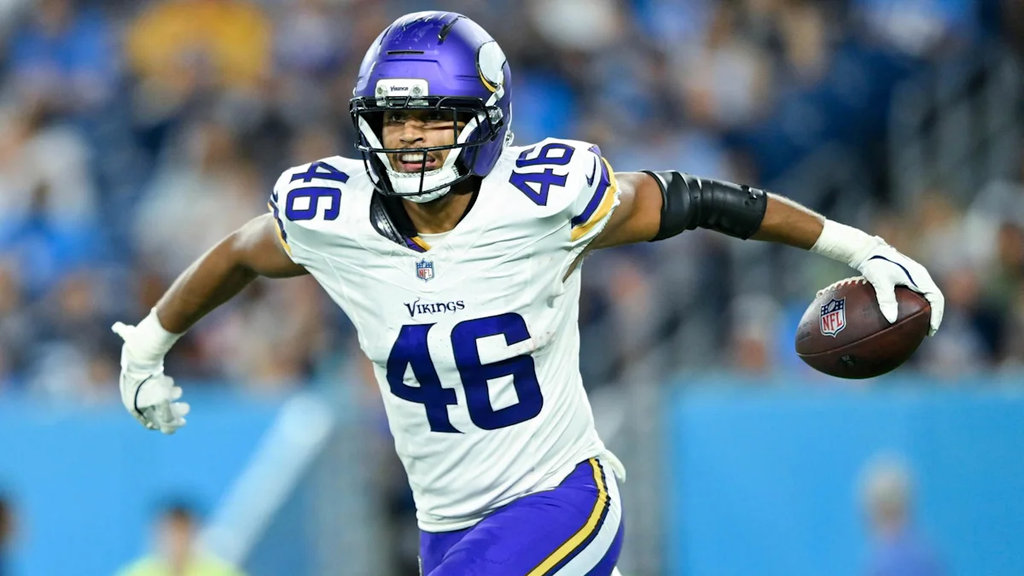
While the deadline machine was sending Pro Bowlers to Minnesota, the Vikings’ actual Wednesday additions were Bryson Nesbit and Devin Culp.
Both joined the practice squad. Nesbit returns after spending last season with Minnesota. Culp, a 2024 seventh-round pick by Tampa Bay, has appeared in 18 NFL games. Neither signing will trouble the breaking news graphics department.
They are useful clues, though.
Josh Oliver’s torn biceps removed far more than a receiving target. Minnesota lost its best blocking tight end, a special teams body and one of the pieces that allowed the offense to change its shape without substituting. T. J. Hockenson’s return solved the pass-catching part. It didn’t replace all the unglamorous work around it.
Cam Grandy was then poached from the practice squad by Cincinnati and Michael Briscoe moved to practice squad injured reserve. Suddenly the 53-man roster contained only Hockenson, Gavin Bartholomew and Ben Yurosek at the position.
Nesbit and Culp aren’t a headline solution; they’re protection against one more injury turning a useful three-man group into another weekly emergency. The move also suggests Minnesota wants to keep developing the heavier personnel group that helped the run game early in the year, even if the player who made it work best won’t return during the regular season.
Sometimes the most honest deadline business isn’t the famous name everybody wants. It’s the two practice squad signings that tell you what the coaches are worried about on a Wednesday afternoon.
Five awards and not one for the offense
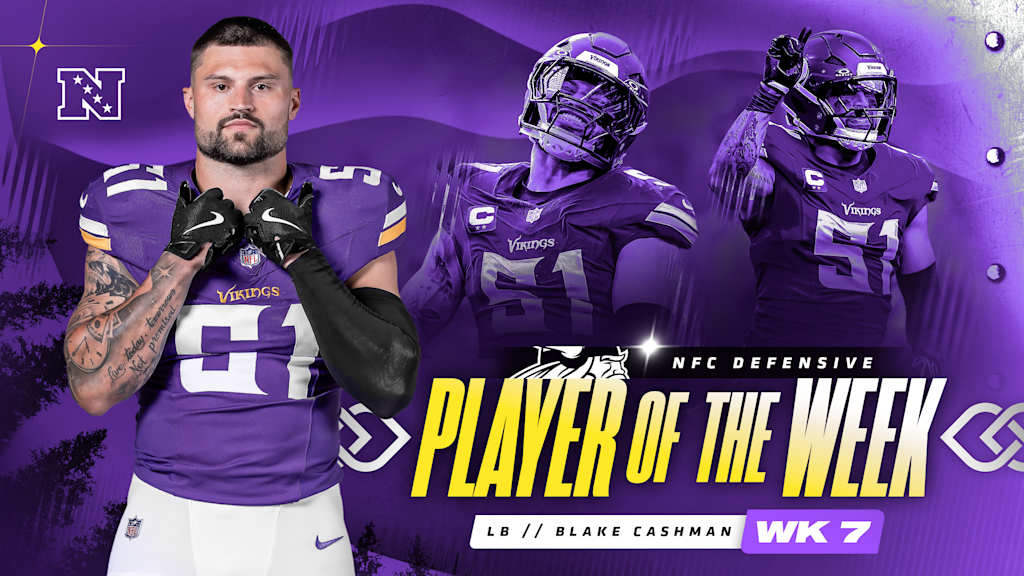
Blake Cashman’s performance against Indianapolis was too large to hide beneath anything. He finished with 12 tackles, four passes defended, three quarterback hits and two sacks, then received NFC Defensive Player of the Week.
The smaller story sits in the list behind him.
Isaiah Rodgers won NFC Special Teams Player of the Week after Chicago. Myles Price won it after Tampa Bay. Reichard followed against Miami. Byron Murphy Jr. took the defensive award after New Orleans, then Cashman made it five Vikings winners across five consecutive games played.
Three special teams awards. Two defensive awards. None on offense.
That’s not a criticism disguised as a stat. Minnesota is 6–0 because those phases have been excellent, not because the league has awarded style points for how the wins arrived. Still, the sequence is a wonderfully neat summary of the season so far. Every week somebody outside the offense has produced the play or performance that’s carried the result.
The Vikings don’t need an offensive player to win a weekly award in Detroit. They may soon need that side of the ball to stop requiring an award-winning rescue.
The rest of the Scroll
Joe Huber allowed one hurry across 30 pass-blocking opportunities against Indianapolis and hasn’t been charged with a sack across his first three starts at left guard. That’s encouraging progress after a difficult debut against Miami. He missed Wednesday’s practice with knee soreness, so Trevor Keegan and rookie Caleb Tiernan took the left guard repetitions. The protection story is improving, but it remains one sore knee from changing again.
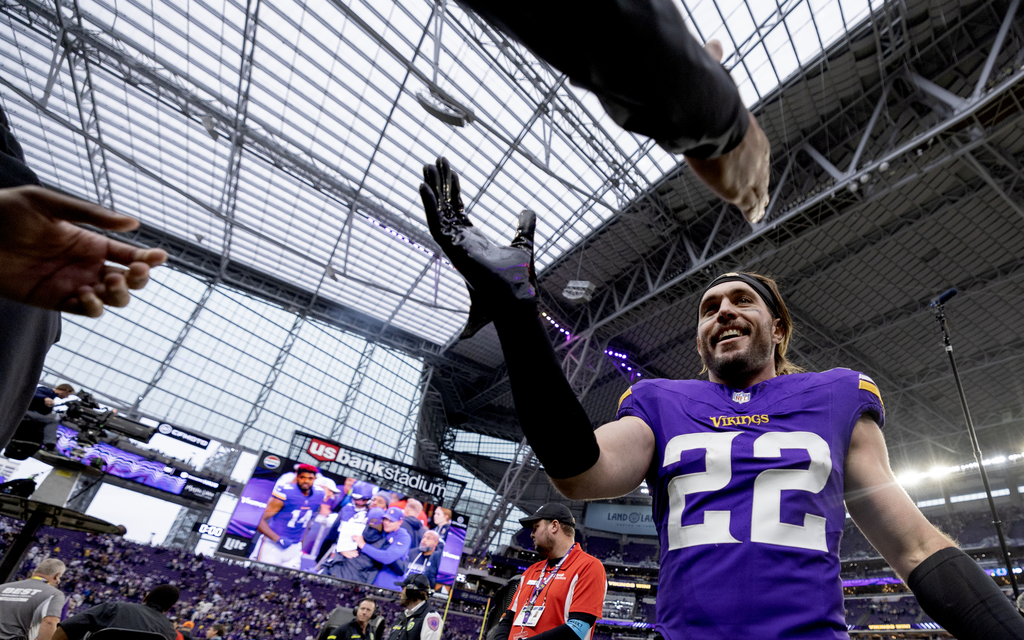
Harrison Smith’s game-sealing interception was the 40th of his career. It tied Ed Sharockman for third in Vikings history and placed Smith alongside Ronde Barber, Larry Wilson and Charles Woodson as the only players to record at least 40 interceptions and 20 sacks. He then jogged to Minnesota’s 40-yard line and planted the ball on the number, because subtlety has never been compulsory.
Will Reichard made three field goals, completed a franchise-record run of 36 consecutive makes and then had a 59-yard attempt blocked. Breaking Gary Anderson’s old mark and losing the streak in the same afternoon feels a very Vikings way to remove the pressure. He can begin again without the entire fanbase counting every kick.
Justin Jefferson quietly reached 600 career receptions. He finished the day on 602, already second in franchise history after passing Randy Moss earlier this season. It says something about Jefferson’s standards that a milestone most receivers would build a month of content around became a line near the bottom of the Colts coverage.
Paul Allen called his 500th regular-season game as the Voice of the Vikings. He sounded the Gjallarhorn before kick-off, led the Skol Chant and then got Harrison Smith’s 40th interception as the finish. If somebody had written the afternoon for him, they might have been told to make it slightly more believable.
Detroit will test the bit nobody’s celebrating
Indianapolis ran for 154 yards. Jonathan Taylor had 95, rookie Seth McGowan added 46 and the Colts found enough success on the ground to keep Daniel Jones away from some of the obvious passing situations Flores normally devours.
Minnesota still allowed only 10 points, so this isn’t a siren attached to a crisis; it’s a warning carried into the least convenient possible venue.
Detroit has Jahmyr Gibbs, an offensive line built to make him dangerous and a play-action game that becomes far more unpleasant once the run is working. Ford Field will also test an offense that’s been able to lean on its defense and special teams through most of the difficult moments, while the road crowd makes its own communication harder.
The Lions game isn’t a referendum on whether 6–0 is “real”. The six wins remain in the table whatever happens next. It’s a chance to see whether the smaller changes from Sunday travel: Golday in the defensive rotation, Mason carrying the backfield, Jennings working in a reduced role and the interior line holding together.
Kick-off is at 6pm in the UK and Ireland on Sunday. Minnesota goes to Detroit unbeaten, which is the obvious story. What happens to the depth chart when the game becomes less forgiving may tell us far more.