
Darren Hails makes his early call on the Minnesota Vikings’ final 53, explains why each player gets a place and sets out what the closest cuts must do in training camp to change his mind.
There’s something wonderfully daft about predicting a final NFL roster before the pads have even gone on. One awkward landing, one rookie flying up the depth chart or one veteran signing can make the whole thing look silly within a week.
Still, this is the point of doing it now. The Vikings currently have a full camp group, a handful of proper competitions and several places where the last man in will tell us something about how Kevin O’Connell, Brian Flores and Nolan Teasley see this team.
I’m using the current Vikings roster and only selecting players who are actually in Minnesota. I’m not adding a veteran edge rusher because I think they should sign one, and I’m not putting Harrison Smith in out of sentiment while he remains outside the squad. If either of those things changes, the whole roster picture changes with it.
I’ll work through it position by position and leave the complete list until the end.
QB: Murray, McCarthy and Wentz
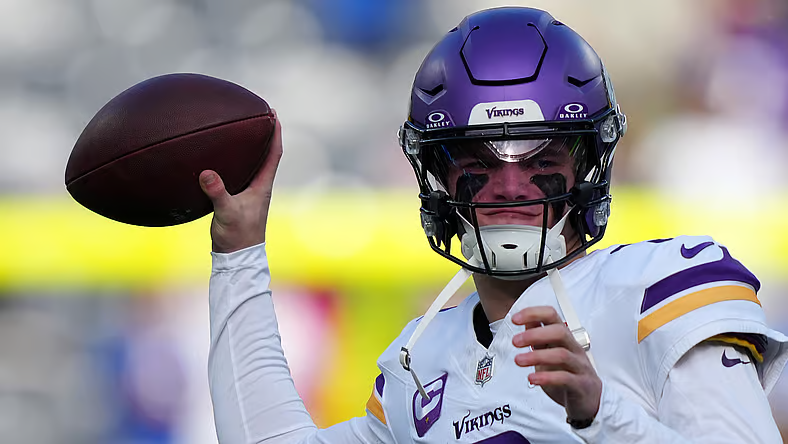
The starting competition doesn’t have to be settled for the roster decision to be fairly simple. Kyler Murray and J. J. McCarthy are both staying unless somebody makes an offer the Vikings can’t sensibly turn down. Murray has the proven NFL ceiling, while McCarthy is still a former first-round pick on a rookie contract with only 10 professional starts behind him. Cutting either would be ridiculous, and trading one just to tidy the room would be nearly as bad.
Carson Wentz gets the third place over Max Brosmer. He started five games for Minnesota last season, played through a shoulder injury and gives O’Connell a veteran who can enter a game without the offense being reduced to three safe throws and a prayer. Murray has missed 21 games over the past three seasons, McCarthy has already had knee and ankle trouble, and Wentz himself needed surgery last year. Keeping three quarterbacks isn’t indulgent with that history, it’s basic self-preservation.
Brosmer has done well to remain in the conversation after starting two games as an undrafted rookie, but four quarterbacks would squeeze a more useful game-day player off the roster. Wentz is the safer third option today.
RB/FB: Jones, Mason, Claiborne and Bredeson
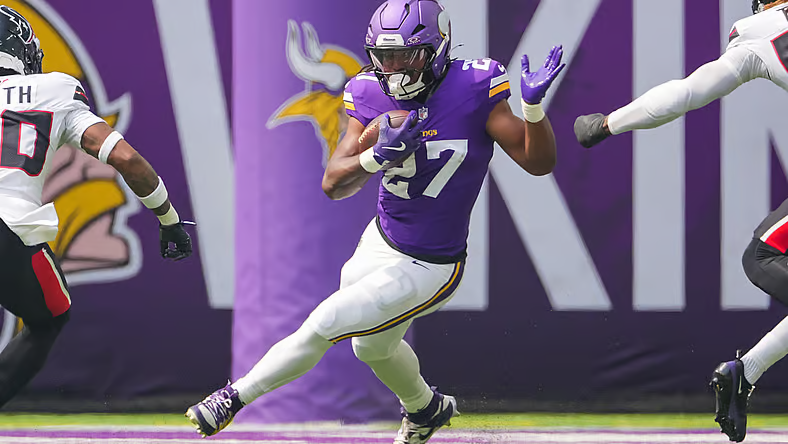
Aaron Jones and Jordan Mason are the clear senior pair, although I expect Mason to receive a bigger share than the usual RB2 label suggests. He led Minnesota with 758 rushing yards last season, broke more tackles than Jones and produced over half of his yardage after contact. Jones still offers the more complete third-down game, including receiving and pass protection, so this should be a genuine partnership rather than a polite depth chart followed by one man getting all the work.
Demond Claiborne makes it because the backfield needs something neither veteran naturally supplies now: immediate speed. His 4.37 pace, receiving potential and return ability give him a clear job while he learns the less glamorous parts of playing running back in the NFL. If he can be trusted in protection, he can force his way into actual offensive packages rather than spending Sundays waiting for an injury.
Max Bredeson replaces C. J. Ham as the only fullback. Minnesota didn’t draft the best fullback in the class to hide him on the practice squad, and the work Frank Smith has put into the run game makes Bredeson more than a novelty selection. He can lead through the hole, play on special teams and move around the formation as an H-back. He won’t receive many touches, but he can help the offense change its shape without changing its personnel.
That leaves Zavier Scott outside despite showing useful receiving ability in 2025. Claiborne has the higher-upside specialist role, while carrying both would mean five backfield players before we even count the tight ends.
WR: six, because they do six different jobs
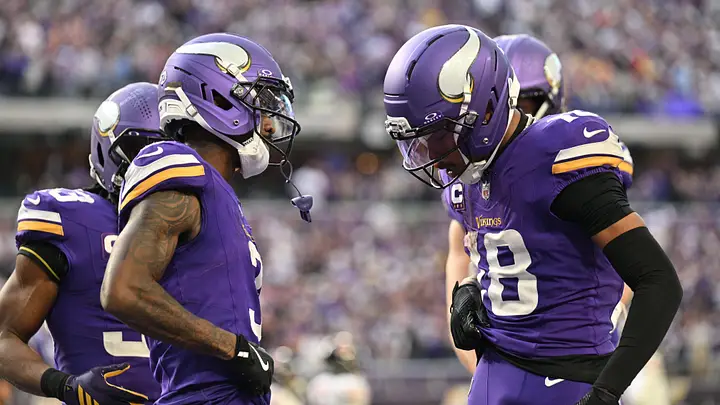
Justin Jefferson, Jordan Addison and Jauan Jennings are not decisions. Jefferson remains the offense’s best player, Addison is still one of the league’s better deep-ball trackers despite an uneven 2025, and Jennings gives Minnesota the strong, awkward, middle-of-the-field receiver it was missing. Jennings also blocks like he takes it personally, which should help the run-game changes.
The next three are selected for very different reasons.
Tai Felton stays because his first season showed that he can become a high-level gunner even before his receiving role develops. A third-round pick entering year two should improve as a receiver, but he doesn’t have to win WR4 to justify a shirt on game day. He already has a special-teams job.
Myles Price is the primary returner. He broke the Vikings’ single-season record for combined kick and punt-return yardage in 2025 and gives the team a threat it’s lacked for years. The four fumbles – three of them lost – aren’t a footnote; they’re the reason his place isn’t completely untouchable. For this prediction, though, his field-position value wins.
Dillon Bell is my sixth receiver and the offensive undrafted rookie I’m backing to make it. He caught almost everything thrown near him during the spring, but the more convincing argument is his range of possible jobs. At Georgia he caught 119 passes and also carried the ball 51 times. At 209 pounds, he offers a different build from Price and Felton, can help on returns and has the strength to become useful on coverage units. WR6 has to do more than stand behind Jefferson in practice. Bell has enough routes to a Sunday role to earn the place.
Keeping six receivers is a small luxury, but each of the bottom three can play special teams. That is how the numbers work.
TE: Bartholomew wins the closest offensive call
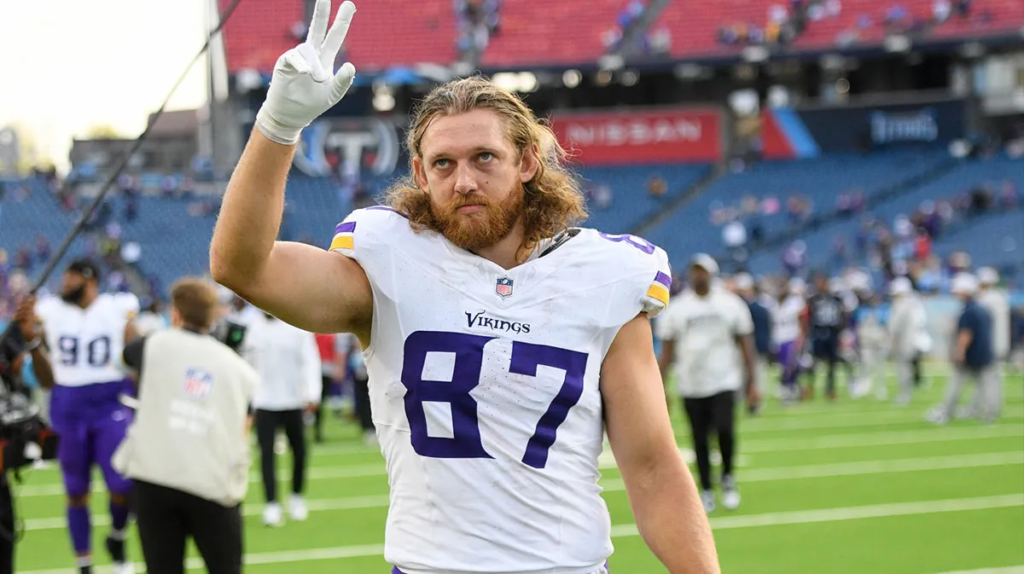
T. J. Hockenson and Josh Oliver are safe. Hockenson remains the main receiving tight end, even after a year in which the passing game never really settled. Oliver is the blocking specialist and will be central to any serious attempt to make the running game less predictable.
I’m giving the third place to Gavin Bartholomew over Ben Yurosek. This is a projection rather than a claim that Bartholomew has already won anything. He missed his entire rookie season with a back injury, while Yurosek made the team, played 116 offensive snaps and did what was asked of him.
Bartholomew gets my vote because Minnesota used a sixth-round pick on his blend of acceleration, receiving ability and aggressive blocking, and we haven’t seen a healthy version of that player yet. The third tight end should be someone who could eventually do a bit of both senior jobs, rather than just survive a handful of snaps. Bartholomew has the greater upside if his back is right.
It’s a very narrow call. Yurosek can reverse it by being the more dependable blocker and better special-teamer throughout camp.
OL: nine, with versatility winning the final places
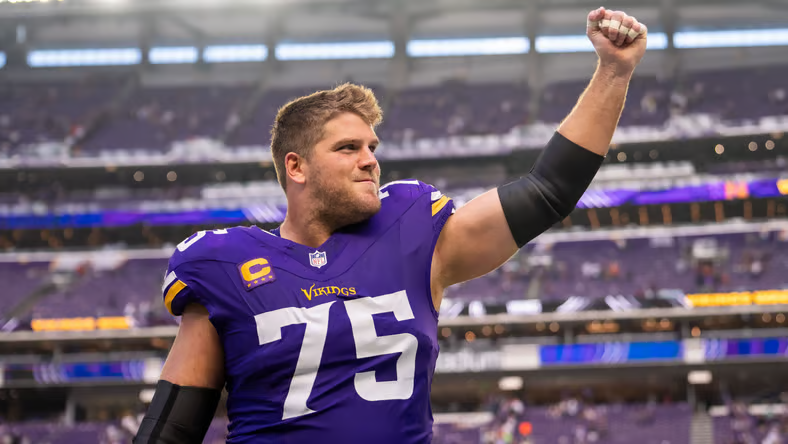
The expected starting five is Christian Darrisaw, Donovan Jackson, Blake Brandel, Will Fries and Brian O’Neill.
Darrisaw being ready to work without restrictions would be a huge change from last summer. Jackson should improve after a solid rookie year, while O’Neill remains the line’s most reliable player. Fries needs a better season after an awkward first year in Minnesota, but his contract and starting experience keep him in place.
Brandel is my starting center. The Vikings gave him first-team work there throughout the spring and declined to add a proven veteran after Ryan Kelly retired. We can debate whether that was wise, but the team’s action has been pretty clear. Brandel’s history at guard and tackle also gives the game-day line some emergency flexibility.
The four backups are Ryan Van Demark, Caleb Tiernan, Michael Jurgens and Joe Huber.
Van Demark has appeared in 43 NFL games and is the most experienced swing tackle in the group. Tiernan is a third-round pick who started 43 consecutive college games and can be developed at tackle without needing to play immediately. Those two make Walter Rouse’s route much harder.
Jurgens gets the backup-center place because he started three times in 2025 and has already handled NFL snaps. Seventh-round rookie Gavin Gerhardt is a proper center with plenty of college experience, but he must show that he is clearly better rather than simply younger.
Huber takes the final line spot. He earned playing time as an undrafted rookie and offers interior cover behind Jackson and Fries. Nine is enough because Brandel, Tiernan and Huber can cover more than one place. The Vikings should be trying to build a useful game-day group, not collecting one backup for every square on a depth-chart graphic.
DL: youth gets the opportunity
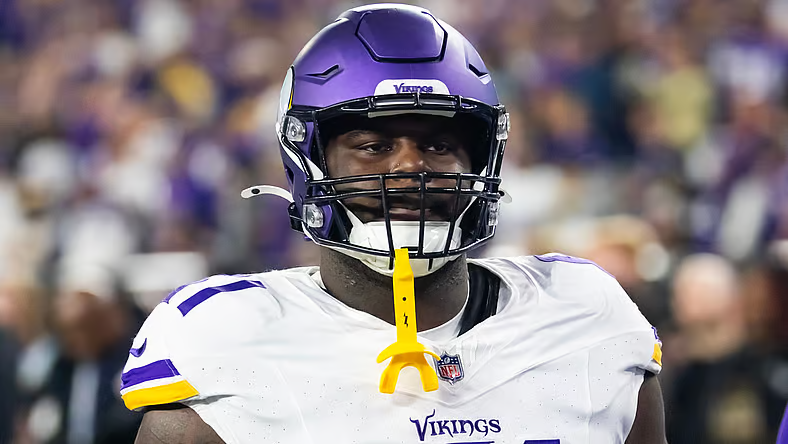
Jalen Redmond is the first name down. His 62 tackles, 12 tackles for loss and six sacks in 2025 weren’t promising numbers for later; they were proper production in the here-and-now. With Jonathan Allen and Javon Hargrave gone, Redmond becomes the standard for a much younger group.
First-round pick Caleb Banks stays even if his foot limits the beginning of camp. His length and disruptive ability are exactly why Minnesota accepted the medical risk. Domonique Orange gives the front a 322-pound interior body who can handle the less glamorous work and let the quicker linemen attack.
Levi Drake Rodriguez earned a much larger role last season, playing 461 defensive snaps after barely featuring as a rookie. Tyrion Ingram-Dawkins stays because Flores can use him inside or reduce his weight and move him towards the edge. That flexibility is especially valuable when the outside linebacker group lacks an established third rusher.
Elijah Williams wins the sixth spot. He has added weight, reportedly worked with the leading defensive line group while Banks was unavailable in the spring and can offer early-down strength without giving up all of the movement Flores wants. I’d rather keep developing that version of Williams than use the last place on a veteran whose ceiling is already known.
There is risk here. Banks is returning from injury, Orange is a rookie and the senior depth is thin. If Isaiahh Loudermilk, Eric Johnson II or Taki Taimani dominates against the run in August, this is an easy place for the projection to change.
OLB: four names, with help coming from elsewhere
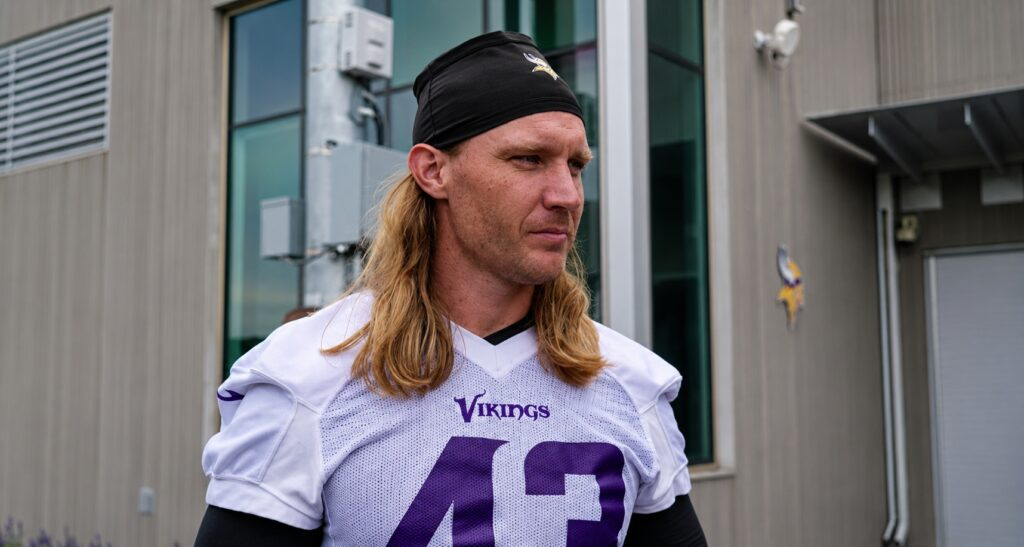
Andrew Van Ginkel and Dallas Turner are the obvious pair. Van Ginkel is one of Flores’ smartest and most flexible defenders, but Minnesota missed him when his neck injury interrupted 2025. Turner now has the workload that comes with being a first-round edge rusher. The Greenard trade removed the comfortable middle ground; he must become a player opponents plan around.
Tyler Batty makes it because his 271-pound frame lets him hold an edge, move inside in certain packages and contribute across special teams. He’s not yet a proven pass rusher, but he offers a sturdier role than some of the smaller reserve options.
Bo Richter takes the fourth place. He’s already contributed on five of the six special-teams phases and enters his third year in the system. For a backup who may only receive a handful of defensive snaps, that weekly usefulness beats a slightly more exciting August rush rep.
Only keeping four looks light, because it is. I can live with it because Ingram-Dawkins can move outside, Jake Golday will learn some of Van Ginkel’s hybrid responsibilities and Eric Wilson has already shown he can be used as a blitzer. Flores has ways to manufacture the fifth rusher. What he doesn’t have is a proven third conventional edge… at least not yet.
ILB: five because Cashman’s availability can’t be ignored
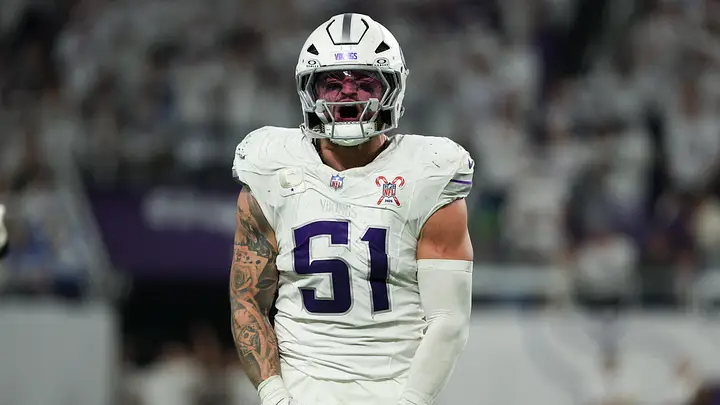
Blake Cashman and Eric Wilson are the starting pair. Cashman’s lingering finger issue is expected to be manageable, but he’s never played a full 17-game season. Wilson took the green dot when Cashman missed time in 2025, finished with 115 tackles, 6.5 sacks and four forced fumbles, then kept a major role after Cashman returned. He’s part of the starting plan in his own right.
Ivan Pace Jr stays despite losing defensive snaps last year. He still played on special teams, has real value as a downhill blitzer and gives the defense an aggressive change of pace (ed: no pun intended?). His job is to become more trustworthy in coverage and tackling rather than trying to be a smaller version of Cashman.
Jake Golday is the long-term investment and the most interesting chess piece. The second-round rookie has the speed to cover ground inside, the size to play over the formation and enough pressure ability to learn some edge work. I don’t expect Flores to throw the entire playbook at him immediately, but his range of possible roles makes him an easy selection.
Josh Ross gets the fifth place for special teams. This isn’t a prediction that he will see much of the defense, it’s recognition that the final linebacker must cover kicks, block on returns and be active on Sundays without needing a package designed for him.
CB: five, with Demmings and McGlothern retained for upside
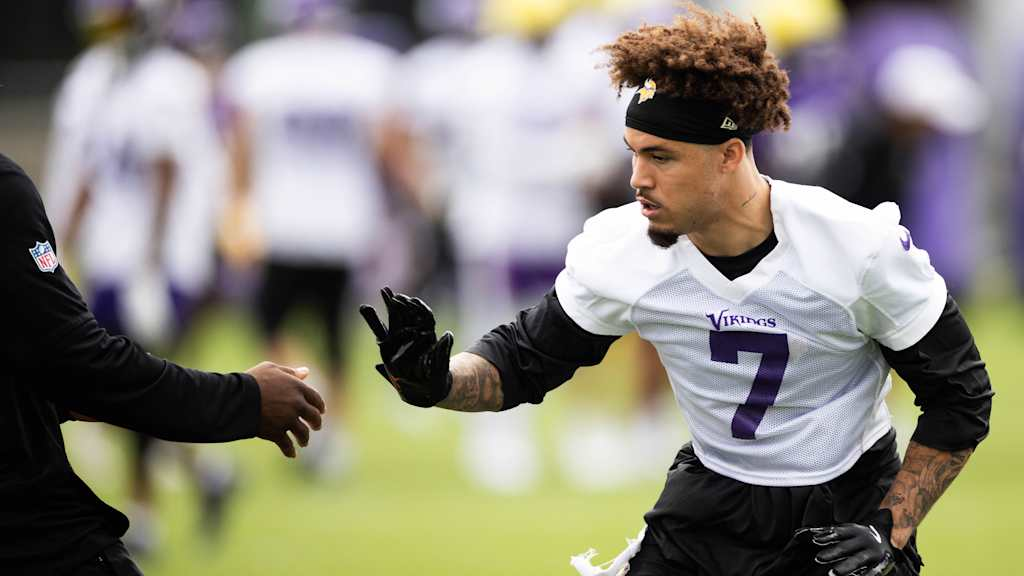
Byron Murphy Jr, Isaiah Rodgers and James Pierre are the top three. Murphy can play inside or outside and has started every game over the past two seasons. Rodgers provided two defensive touchdowns in one afternoon last year and gives the group proper recovery speed. Pierre allowed only 15 completions on 35 targets for Pittsburgh in 2025 and already knows coaches from his earlier overlap with Flores and defensive passing-game coordinator Gerald Alexander.
Charles Demmings is the fourth corner. Minnesota drafted him in the fifth round for his length, athleticism and ball skills, and he looked comfortable when spring injuries created extra work. He may not be ready to start, but losing a rookie with that development profile to waivers would be poor roster management.
Dwight McGlothern takes the fifth place. He’s spent two years in the system, offers useful size on the boundary and has flashed often enough in practice to deserve one more proper chance. This is a thin group if injuries arrive, although the Vikings can move Murphy outside and use their safeties to handle the slot.
S: life without Harrison Smith
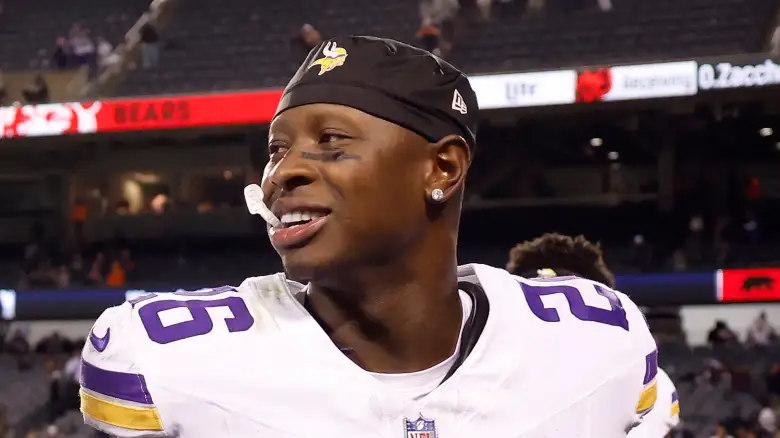
This is the most uncomfortable section to write, because Harrison Smith has been part of the Vikings for so long that leaving him off still looks like a typo. It’s not. He isn’t on the current roster, so this prediction moves on without him.
Joshua Metellus becomes the leader. Calling him a safety barely explains his job, but that versatility is why the defense can survive with lighter numbers at other positions. He can play deep, in the slot, in the box or around the line of scrimmage, and he understands the disguise that makes Flores’ defense work.
Theo Jackson is selected after his defensive workload jumped from 78 snaps in 2024 to 530 last season. He recorded the first two sacks of his career, forced a fumble and now has the clearest route to taking a large share of Smith’s old snaps.
Third-round rookie Jakobe Thomas stays because Flores was heavily involved in the selection and his range gives Minnesota another possible deep safety. He shouldn’t be expected to replace Smith’s football brain in August, but he has the physical ability to earn a real role.
Tavierre Thomas is primarily a special teams selection who can also cover from the slot and fill in at safety. Jay Ward gets the fifth place because his defensive snap count rose sharply last season and he can operate in several of the hybrid jobs Minnesota asks of its defensive backs.
Five safeties may look heavy next to five corners, but Metellus, Tavierre Thomas and Ward all blur the line between safety, nickel and linebacker. On this defense, that’s not duplication, it’s how Flores keeps changing the picture.
Specialists: Hekker wins on the hold
Will Reichard and Andrew DePaola may be the easiest two selections on the roster. Reichard made 33 of 35 field goals last season and earned first-team All-Pro honours. DePaola has alternated first- and second-team All-Pro selections since 2022. You don’t interfere with that operation for the sake of creating a competition.
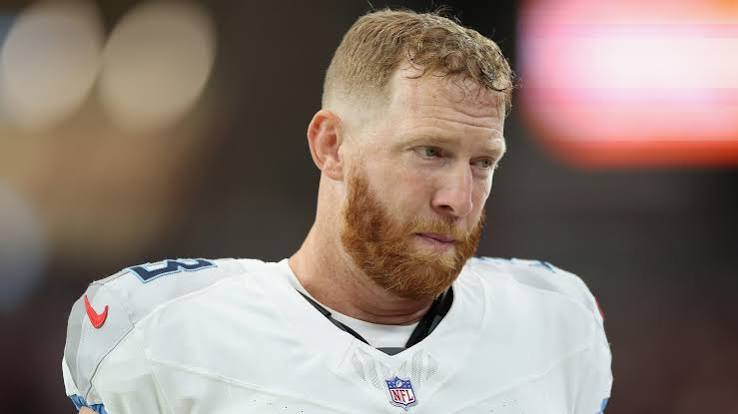
The competition is at punter, where I have Johnny Hekker beating Brett Thorson.
Thorson is a Ray Guy Award winner and has the younger leg. Hekker is 36, but he’s one of the most accomplished punters of his generation and has years of experience as a holder. When the kicker is as valuable as Reichard, the decision can’t be made on gross punting average alone. If the punting is close, I expect Minnesota to choose the man Reichard trusts most on field goals.
The International Player Pathway exemption also gives the Vikings a clean way to keep developing Thorson if Hekker wins. That makes experience an easier choice for the active 53.
The players just outside – and what they must do in camp
Max Brosmer, quarterback
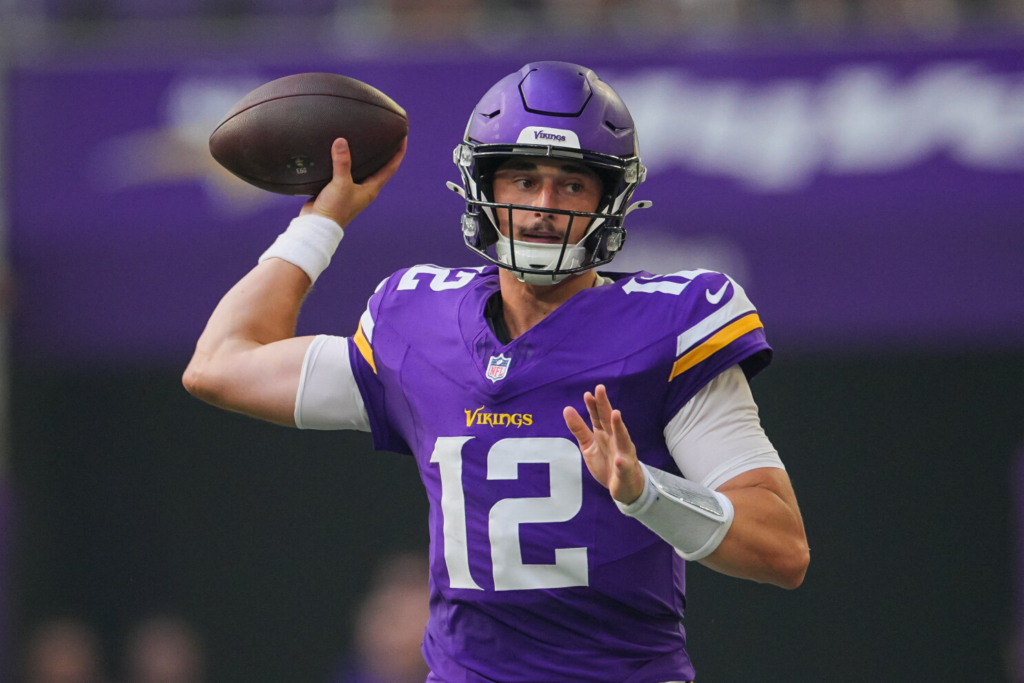
Brosmer must make the gap between himself and Wentz look smaller than the value of a veteran third quarterback. That means commanding the full offense, creating explosive plays against second-team defenders and showing that the four-interception Seattle start is not the player he is now. He probably also needs a trade or injury above him, because four quarterbacks remains difficult to justify.
Zavier Scott, running back
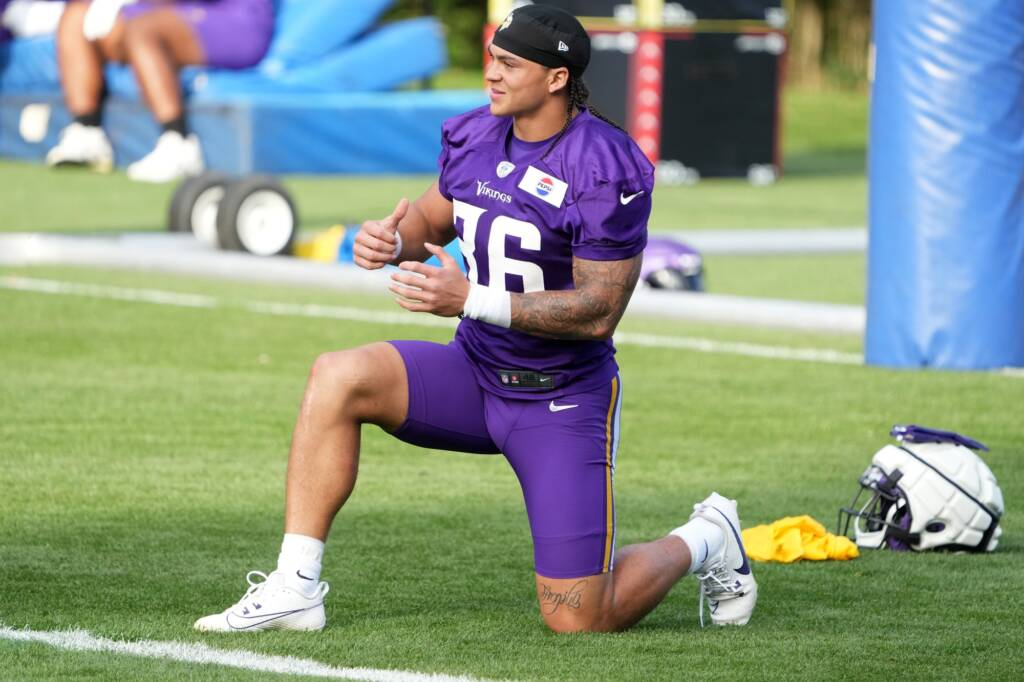
Scott needs to become the best third-down back outside Jones. Receiving ability is already part of his case; now he must win in pass protection and on coverage units. If Claiborne’s speed shows up but his blocking doesn’t, Scott can turn this into a proper decision.
Ben Yurosek, tight end
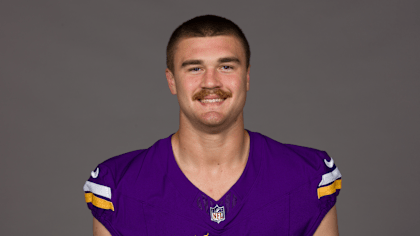
Yurosek’s route is reliability. He must block better than Bartholomew, play on every special teams unit asked of him and avoid the small mistakes that often decide a TE3 competition. If Bartholomew still looks rusty after a year out, Yurosek should be the favourite.
Walter Rouse, offensive line
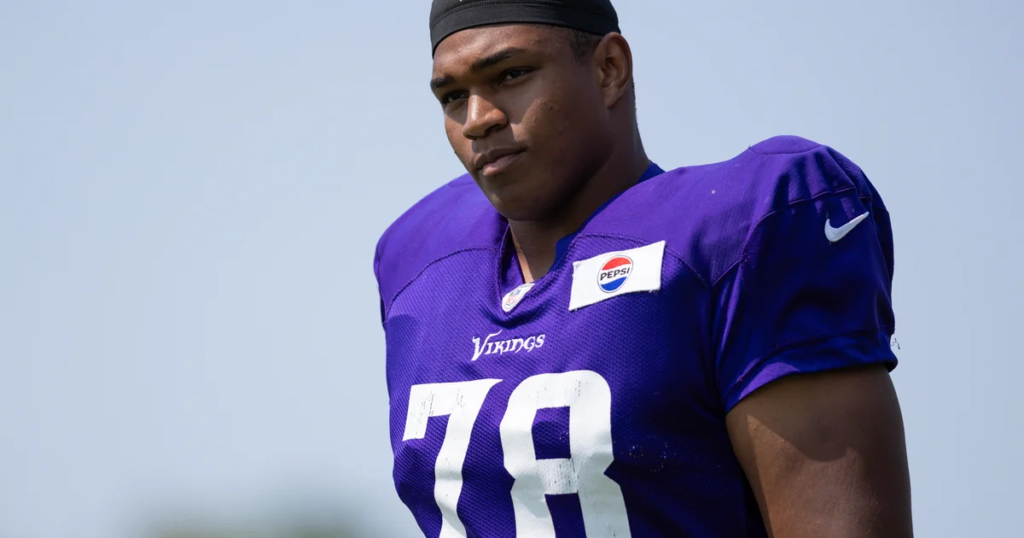
Rouse can’t afford to be only the fourth-best tackle. He needs to prove he can play guard as well, or beat Van Demark outright as the trusted swing tackle. A strong preseason against starting-level edge players would change the numbers quickly.
Gavin Gerhardt, center
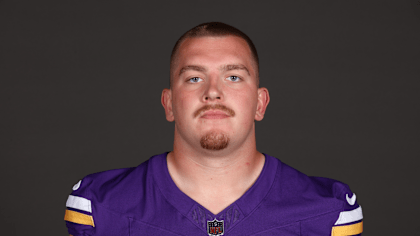
Gerhardt must win the backup center job rather than wait for the Vikings to keep him because he was drafted. Clean snaps are only the start. He needs to show he can make protection calls, anchor against NFL power and cover guard in an emergency. If he does, Jurgens and Huber become vulnerable.
Isaiahh Loudermilk, defensive line
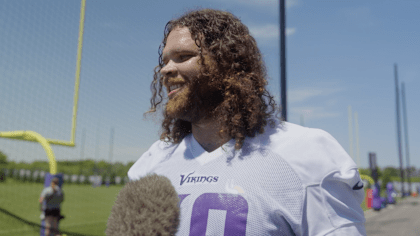
Loudermilk’s path is to become the front’s best dependable run defender. Minnesota has plenty of projection and movement inside; the 6-foot-7 veteran can force his way in by controlling early downs and proving the young group would be too light without him.
Chaz Chambliss, outside linebacker
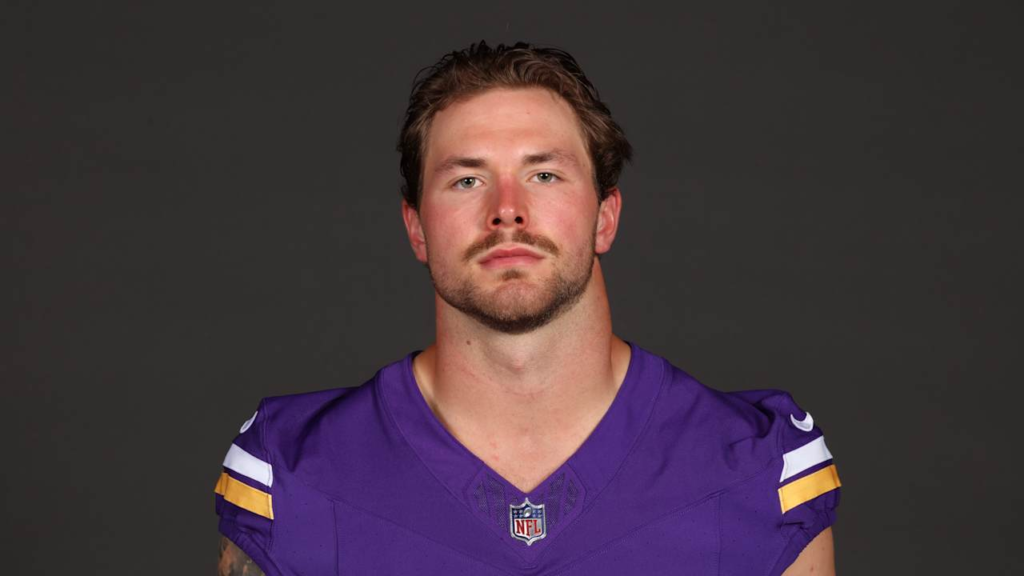
Special teams will keep Chambliss close, but he needs to create actual pressure. Batty offers size and Richter offers established coverage-unit value, so Chambliss must beat tackles often enough that Flores wants him in the pass-rush rotation rather than merely available for it.
Jacob Roberts, inside linebacker
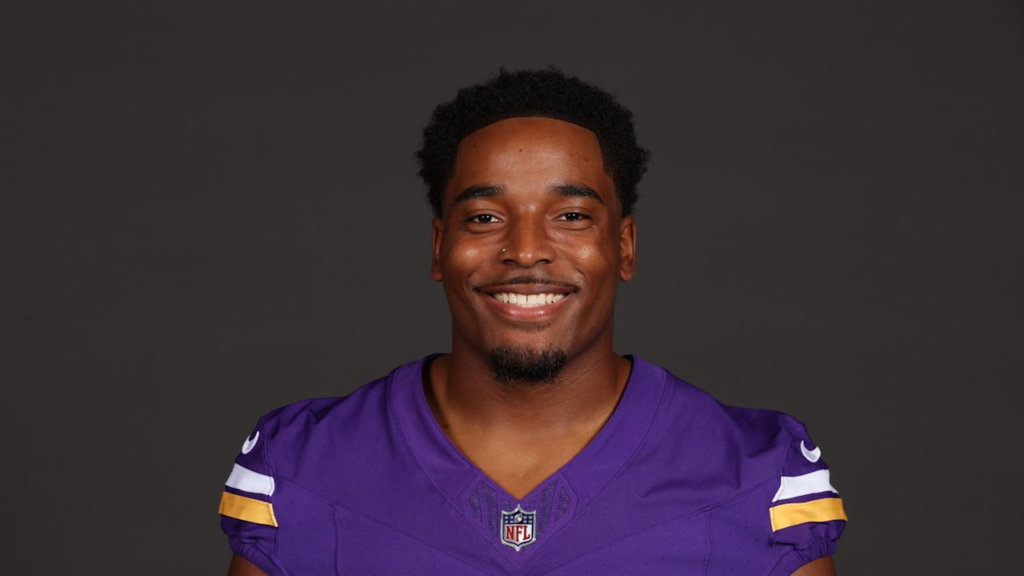
Roberts has two years of CFL experience, including 19 special-teams tackles, which gives him a genuine route past Ross. He needs to look comfortable in NFL coverage and become one of Matt Daniels’ first choices across the kicking units. This is a more open competition than the names suggest.
Kahlef Hailassie, safety
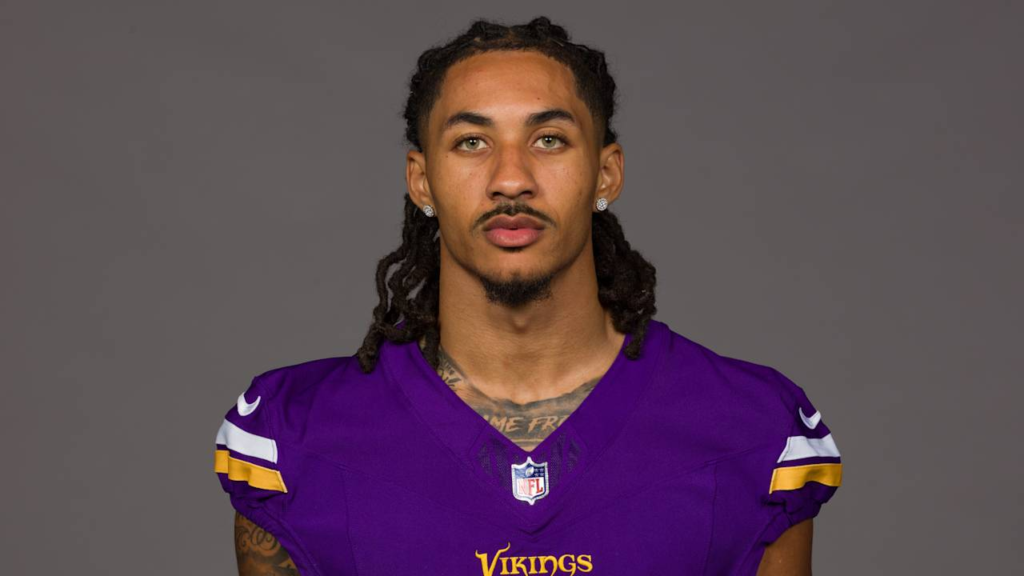
Hailassie must show that last year’s move from corner to safety has produced a player the defense can trust, not simply an interesting preseason experiment. His two-interception game against Houston showed the ball skills. Consistent communication and special teams could put pressure on Tavierre Thomas or Ward.
Brett Thorson, punter
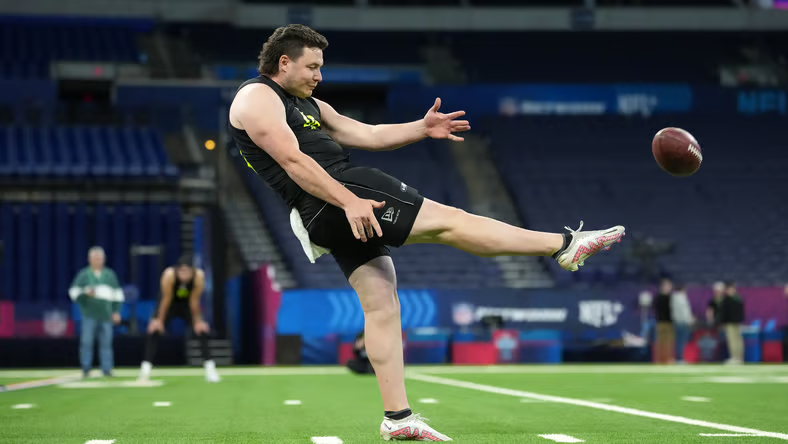
Thorson needs to make the punting difference obvious while keeping the holding operation boring. Distance alone won’t do it. He must control placement and hang time, handle poor snaps and make Reichard just as comfortable as Hekker does. If he can do all of that, youth should win the tie.
Where I am probably wrong
Update, 28 July: This prediction was completed before Minnesota agreed to terms with Jamal Adams. The former All-Pro safety played linebacker for Las Vegas last season and arrives as more than a camp number, but I don’t think he is guaranteed a place. If I had to update the 53 today, I would put Adams just inside and remove Josh Ross, because his pressure and hybrid value give Brian Flores another useful option. The complication is special teams: Ross’ case is built around them, while Adams did not play a special-teams snap for Las Vegas last season. That makes this a proper camp competition, so I am leaving the original prediction intact until we see how Minnesota uses him.
The sixth defensive lineman, fourth outside linebacker, fifth inside linebacker, third tight end and final two offensive linemen could all change before the first preseason game. That’s the honest answer. Those places depend less on a depth-chart label than on special teams, positional flexibility and whether a coach trusts someone to survive a real Sunday snap.
A further outside signing would cause another squeeze. A veteran edge would probably remove Batty or Richter. A Harrison Smith return would threaten the fifth safety or force Minnesota to carry one fewer player somewhere else. A corner addition could take McGlothern’s place immediately.
For now, though, this 53 gives O’Connell six receivers with distinct jobs, gives Flores enough hybrid defenders to cover a thin edge group and protects the offense with three experienced quarterbacks and nine linemen. It’s younger on the defensive front, heavier at safety and built around special-teams value at the back end.
Now they have to put the pads on and ruin the prediction. That’s the fun bit.
The full predicted 53
| Position | Total | Players |
|---|---|---|
| Quarterback | 3 | *Kyler Murray *J. J. McCarthy *Carson Wentz |
| Running back/fullback | 4 | *Aaron Jones Sr *Jordan Mason *Demond Claiborne *Max Bredeson |
| Wide receiver | 6 | *Justin Jefferson *Jordan Addison *Jauan Jennings *Tai Felton *Myles Price *Dillon Bell |
| Tight end | 3 | *T. J. Hockenson *Josh Oliver *Gavin Bartholomew |
| Offensive line | 9 | *Christian Darrisaw *Donovan Jackson *Blake Brandel *Will Fries *Brian O’Neill *Ryan Van Demark *Caleb Tiernan *Michael Jurgens *Joe Huber |
| Defensive line | 6 | *Jalen Redmond *Caleb Banks *Domonique Orange *Levi Drake Rodriguez *Tyrion Ingram-Dawkins *Elijah Williams |
| Outside linebacker | 4 | *Andrew Van Ginkel *Dallas Turner *Tyler Batty *Bo Richter |
| Inside linebacker | 5 | *Blake Cashman *Eric Wilson *Ivan Pace Jr *Jake Golday *Josh Ross |
| Cornerback | 5 | *Byron Murphy Jr *Isaiah Rodgers *James Pierre *Charles Demmings *Dwight McGlothern |
| Safety | 5 | *Joshua Metellus *Theo Jackson *Jakobe Thomas *Tavierre Thomas *Jay Ward |
| Specialists | 3 | *Will Reichard *Andrew DePaola *Johnny Hekker |
| Total | 53 |
UK & Ireland Vikings Fans
For more Vikings chat from this side of the Atlantic, follow the UK & Ireland Minnesota Vikings Fan Club on all our social media channels.